
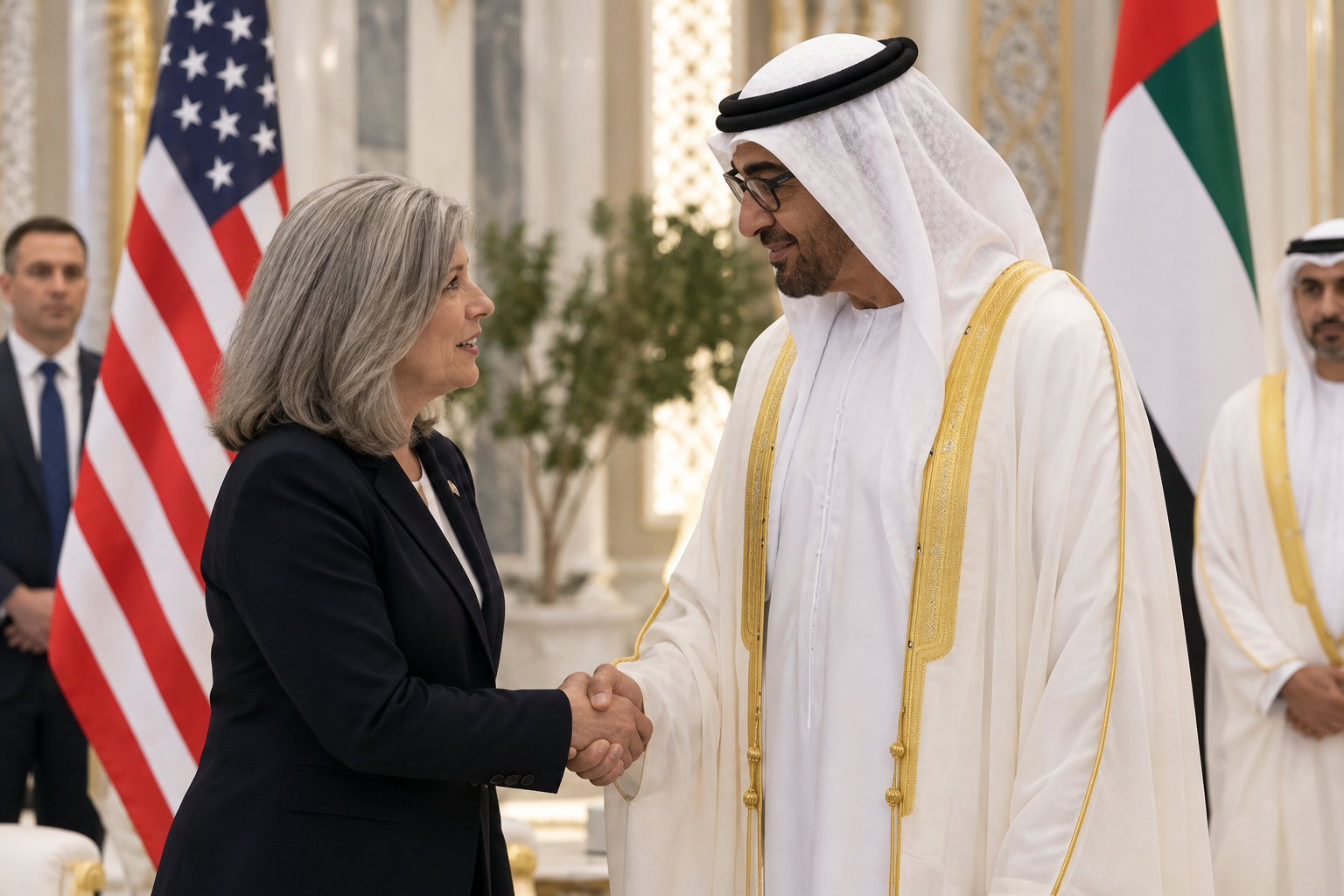
UAE President Receives US Senator Joni Ernst as Both Sides Stress Strategic Ties
Sheikh Mohamed bin Zayed received US Senator Joni Ernst in Abu Dhabi, with talks centred on UAE-US strategic cooperation, regional security and efforts for peace in the Middle East. The meeting comes amid heightened tension across the region.
ABU DHABI, 2 October — UAE President His Highness Sheikh Mohamed bin Zayed Al Nahyan received US Senator Joni Ernst in Abu Dhabi on Friday, in a meeting focused on strengthening the strategic partnership between the two countries.
According to the Emirates News Agency (WAM), the discussion also covered regional security and stability, as well as efforts to promote peace in the Middle East and beyond. The two sides underlined a shared commitment to developing bilateral relations further for the benefit of both nations.
Who attended
Sheikh Hamdan bin Mohamed bin Zayed Al Nahyan, Deputy Chairman of the Presidential Court for Special Affairs, and Sheikh Mohammed bin Hamad bin Tahnoon Al Nahyan, Adviser to the UAE President, joined the meeting along with other officials. WAM did not publish further detail on the specific topics raised or on any agreements reached.
Why a congressional visit matters
Readers sometimes treat visits by members of the US Congress as ceremonial. They are not. Senators help shape American policy through legislation, budget decisions, oversight of arms sales and the confirmation of senior officials, so meetings with Gulf leaders give both sides a chance to explain priorities directly rather than through diplomatic cables.
For the UAE, regular contact with US lawmakers is part of a wider effort to keep relations with Washington broad, covering defence, trade, energy and technology. For visiting senators, it is a chance to hear from a country that sits at the heart of regional security and energy markets.
A tense regional backdrop
The talks took place against a difficult regional picture. Over recent weeks the UAE has been among the states condemning attacks on its neighbours. In August it denounced an Iranian attack on Kuwait, and on 1 October its Foreign Ministry condemned a Houthi drone strike on a power distribution station in Madinah, Saudi Arabia, calling it a violation of Saudi sovereignty and reaffirming solidarity with the Kingdom.
Closer to home, this week's mid-air emergency aboard a flydubai flight bound for Tel Aviv, which Anwar Gargash has called a terrorist act, has added to the sense that security cooperation remains a live issue.
Energy markets have felt the strain as well. Reuters reported that Brent crude was heading for a gain of about 13% in September, even as oil flows through the Strait of Hormuz recovered towards pre-war levels late in the month. In the UAE, those movements fed through to higher October pump prices, with Super 98 rising to AED 4.40 a litre from AED 3.80.
The peace track
WAM's readout referred to efforts to promote peace, and the UAE has stayed engaged on humanitarian and diplomatic fronts. Reports in early August noted the UAE marking 1,000 days of its humanitarian mission supporting Gaza and welcoming an agreement on Hamas disarmament. Whether Friday's discussion touched on those files was not specified.
What to watch
Official statements of this kind are typically brief, and the substance often emerges later through follow-up announcements, joint statements or policy moves in Washington. Observers will look for any signs of new cooperation in defence, technology or energy, and for how the UAE positions itself on the region's most pressing crises.
For now, the message from Abu Dhabi is one of continuity: close ties with the United States, a focus on stability, and a continued call for diplomacy.

Leave a comment
Your email address will not be published. Required fields are marked *