
Third US Carrier Reaches the Middle East as Iran Warns of Retaliation; Saudi Flights From the UAE Stay Disrupted
A third American aircraft carrier has entered the region while Tehran says it will not wait for a US attack before responding. For UAE residents, the most immediate impact is on flights, with Etihad grounding its Riyadh and Dammam services through 19 November.
Tension across the Gulf rose again on Monday. A third American aircraft carrier arrived in the region, Iran said it would not sit back and wait for a US strike, and airlines based in the UAE kept cutting services to Saudi Arabia.
A third carrier joins the build-up
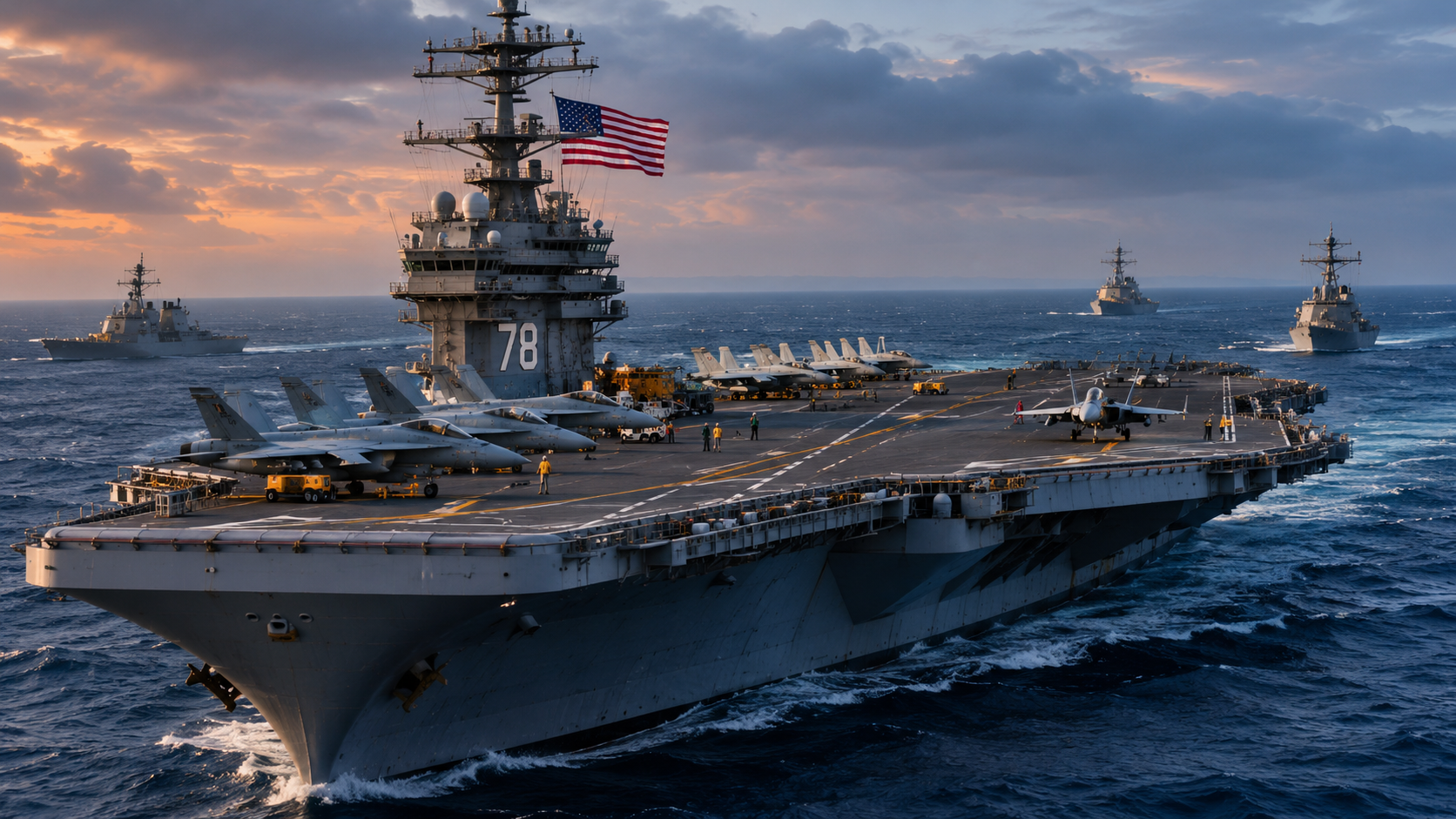
The USS Theodore Roosevelt moved into the area covered by US Central Command on Sunday, according to ABC News reporting cited by Gulf News. It joins the USS George H.W. Bush and the USS George Washington, which means three carrier strike groups are now operating in the region at the same time. A US official told ABC that the carriers form part of a larger deployment of more than 20 Navy vessels assigned to support Washington's blockade of Iranian ports.
The reinforcement arrives while negotiations appear to be stuck. The New York Times has reported that the United States and Israel are weighing fresh strikes on Iranian energy infrastructure and other economic assets. Tehran's public response has been to harden its language rather than soften it.
Tehran: no waiting for the first blow
Iran's Deputy Foreign Minister, Kazem Gharibabadi, said his country would not hold its fire until an American attack had landed. He added that inspectors from the International Atomic Energy Agency will be refused access to damaged nuclear sites until Iran's conditions are met and the war is permanently over.
Other Iranian officials struck different notes. Mohammad Eslami, who heads the Atomic Energy Organisation, said Iran is developing its first domestically built nuclear fusion reactor using tokamak technology, though he offered no timeline. Foreign Minister Abbas Araghchi, replying on X to US Secretary of State Marco Rubio's comments on military power and international law, referred to the Roman general Pompey and warned that those who ignore history risk repeating it.
Bahrain and Saudi Arabia under fire
On Sunday, Iran's Revolutionary Guard Corps claimed that six drones had targeted a US radar facility at Riffa Air Base in Bahrain. Bahraini authorities said their air defences intercepted Iranian attacks. The extent of any damage has not been independently verified. The US Embassy in Bahrain has since urged American citizens to stay vigilant, citing possible threats from Iran and the Houthis and warning that flights could be cancelled and airspace closed.
The UAE condemned the incident, describing it as a violation of Bahrain's sovereignty and security and reaffirming its solidarity with the kingdom.
Saudi Arabia faced its own attacks. The Saudi-led coalition said air defences shot down two ballistic missiles launched by Yemen's Iran-backed Houthis towards Riyadh on Sunday, along with drones over the eastern region and Medina. The interceptions follow a recent rise in Houthi attacks on Saudi energy and transport infrastructure, military sites and the capital's financial district.
In a development that cut against the trend, the Houthis released around 600 detainees. A Houthi official called it the largest unilateral release in Yemen's 12-year civil war.
Shipping remains exposed
Maritime risk is also climbing. The Revolutionary Guard claimed that two oil tankers were hit by sea mines near the Strait of Hormuz, framing the incidents as retaliation for the US blockade. Those claims have not been independently verified. On Monday, the UK Maritime Trade Operations centre (UKMTO) reported that a tanker sailing outbound through the strait was struck by an unidentified projectile, as reported by The National.
Separately, UKMTO said another tanker had reported being approached by a suspected mothership and a skiff carrying four armed people roughly 430 nautical miles east of Socotra, Yemen. It advised vessels to exercise caution.
What it means for travellers leaving the UAE
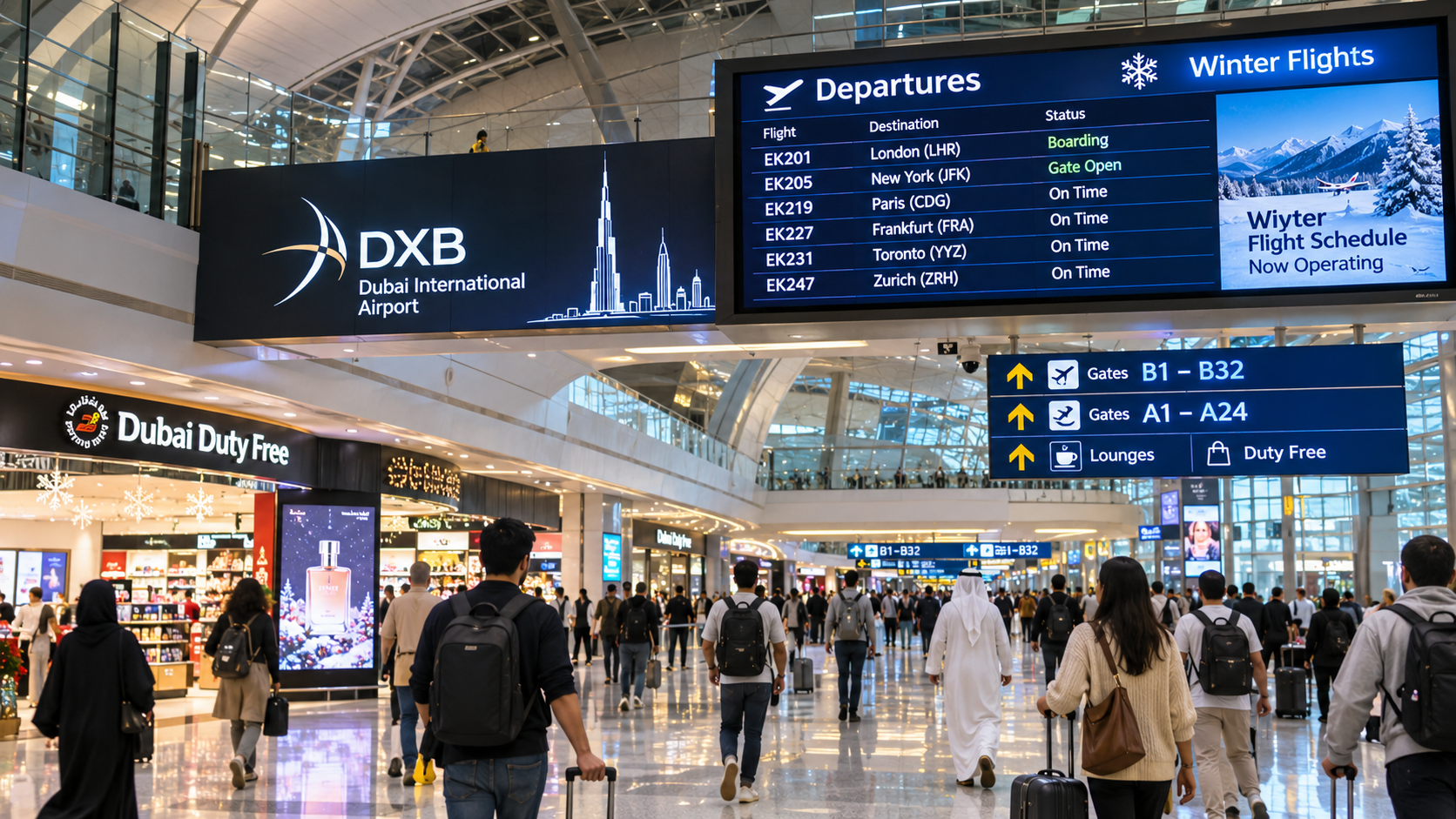
The most direct effect for residents is in the departures hall. Etihad Airways has cancelled all passenger and cargo flights to Dammam and Riyadh through 19 November, although selected Jeddah services have resumed. Emirates has changed some of its Saudi schedules, while flydubai and Air Arabia are running selected services to Saudi destinations. Iranian airlines remain suspended from flying to and from the UAE.
Not every disruption is tied to the conflict. SpiceJet's Dubai departures to Mumbai, Amritsar and New Delhi were listed as cancelled on Monday after ground-handling and check-in services for the carrier were suspended at Dubai International on 12 November over unpaid dues, Gulf News reported.
There were some signs of recovery elsewhere. SWISS plans to restore daily Zurich–Dubai flights from 25 November, and Eurowings intends to resume daily Berlin–Dubai services on the same date. ITA Airways has suspended Dubai flights until 30 November.
The conflict, which began in February, has left the Strait of Hormuz technically shut, according to The National. The International Monetary Fund expects the UAE economy to contract by 3.9 per cent this year before rebounding by 7.7 per cent in 2027, a forecast that depends on shipping routes returning to normal and the strait reopening.
What to watch next
Analysts and officials will be tracking three things: further American deployments and any decision on strikes, Iran's promised response, and security incidents in Bahrain and around Hormuz. Passengers should confirm flight status directly with their airline before heading to the airport, because schedules can change at short notice.

Leave a comment
Your email address will not be published. Required fields are marked *