Iran Threatens New "Restricted Zone" Beyond Strait of Hormuz, Raising Gulf Shipping Alarm
Iran plans a new restricted maritime zone beyond the Strait of Hormuz, threatening vessels as Gulf shipping falls and oil prices climb above $97 a barrel.
A New Flashpoint at the World's Busiest Oil Corridor
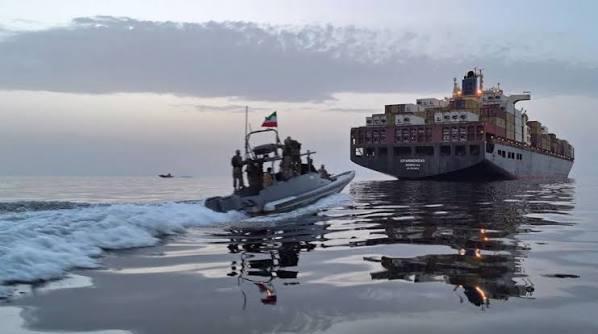
Tensions in the Gulf have taken another sharp turn after senior Iranian officials indicated that Tehran intends to declare a new "restricted zone" extending beyond the Strait of Hormuz, one of the most strategically vital waterways on the planet. According to security officials cited in regional reporting, the zone would begin at the line currently enforced by a United States naval blockade and stretch further into parts of the Gulf, effectively expanding the area where Iran claims the right to challenge, delay, or sanction commercial vessels.
The announcement lands at a moment of already heightened anxiety among shipping companies, insurers, and energy traders. For residents of the UAE, a nation whose economy, energy exports, and maritime trade are deeply tied to safe passage through Hormuz, the development is being watched with particular concern.
Why the Strait Matters So Much
The Strait of Hormuz is the narrow channel separating Iran from Oman and the UAE, linking the oil-rich Gulf to the open waters of the Arabian Sea. Roughly a fifth of the world's oil and a significant share of global liquefied natural gas has historically passed through this corridor. Any disruption here does not stay contained to the region — it ripples through fuel prices, shipping insurance premiums, and global supply chains within hours.
Over the past several months, that theoretical risk has become an operating reality. Shipping traffic through Hormuz has fallen sharply, with recent data showing daily transits reduced to a fraction of pre-crisis levels. Vessel owners have grown increasingly reluctant to risk the passage, and insurers have adjusted premiums to reflect a waterway that now carries genuine wartime risk rather than routine commercial exposure.
A Weekend of Escalation
The latest warning follows a weekend that saw a significant escalation in an already fragile standoff. The United States reportedly struck three Iranian oil tankers after Iran's Revolutionary Guard Corps (IRGC) targeted American naval vessels, marking one of the most direct confrontations between the two sides since hostilities in the region began earlier this year. Iranian officials have responded with unusually blunt language. Parliament Speaker Mohammad Bagher Ghalibaf was quoted saying the "era of proportional responses has ended," warning that any future action against Iran would be met with a response he described as "faster, heavier and more painful."
Compounding the uncertainty, there are separate reports suggesting Iran and Oman may have reached an understanding on an alternative shipping corridor through the strait, though the details of any such arrangement have not been made public. That lack of clarity is itself adding to the unease among shipping firms trying to plan routes and manage risk.
Impact Already Visible in Oil Markets
Financial markets have already begun to price in the heightened risk. Brent crude, the global oil benchmark, has climbed above $97 a barrel — a level that reflects genuine concern about supply disruption rather than speculative trading alone. For a country like the UAE, which relies on stable energy markets both as a major oil producer and as a re-export and logistics hub, sustained volatility of this kind carries consequences well beyond the price at the pump.
The UAE's own fuel prices for September already reflect some of this pressure, with diesel costs in particular climbing by double digits month-on-month, a trend officials have linked directly to the expired ceasefire arrangement between the US and Iran and the resulting uncertainty over Gulf shipping lanes.
The UAE's Position
The UAE has consistently and publicly condemned attacks and threats against commercial shipping in and around the strait, framing safe passage as a matter of both regional stability and international law. Emirati officials have previously expressed disappointment when the UN Security Council failed to act decisively on the crisis, noting that dozens of direct attacks on commercial vessels have already occurred since the conflict began, with crew casualties and thousands of seafarers left stranded at various points.
For a country whose ports, airlines, and energy sector are deeply integrated into global trade networks, the stakes of the Hormuz standoff are not abstract. Every escalation raises questions about insurance costs, shipping schedules, and the broader investment climate in the Gulf.
What Comes Next
Whether Iran's proposed restricted zone materialises as described — and whether it triggers a fresh round of confrontation with US naval forces already patrolling the area — remains to be seen. What is clear is that the corridor's importance to global trade means any formal declaration would be closely scrutinised by governments, shipping federations, and energy markets worldwide.
For now, the message from Gulf capitals, including Abu Dhabi, has been consistent: freedom of navigation through the Strait of Hormuz is non-negotiable, and further attempts to restrict or threaten it will draw continued condemnation. Residents and businesses across the UAE are likely to keep a close eye on fuel prices and shipping schedules in the days ahead as the situation develops.