
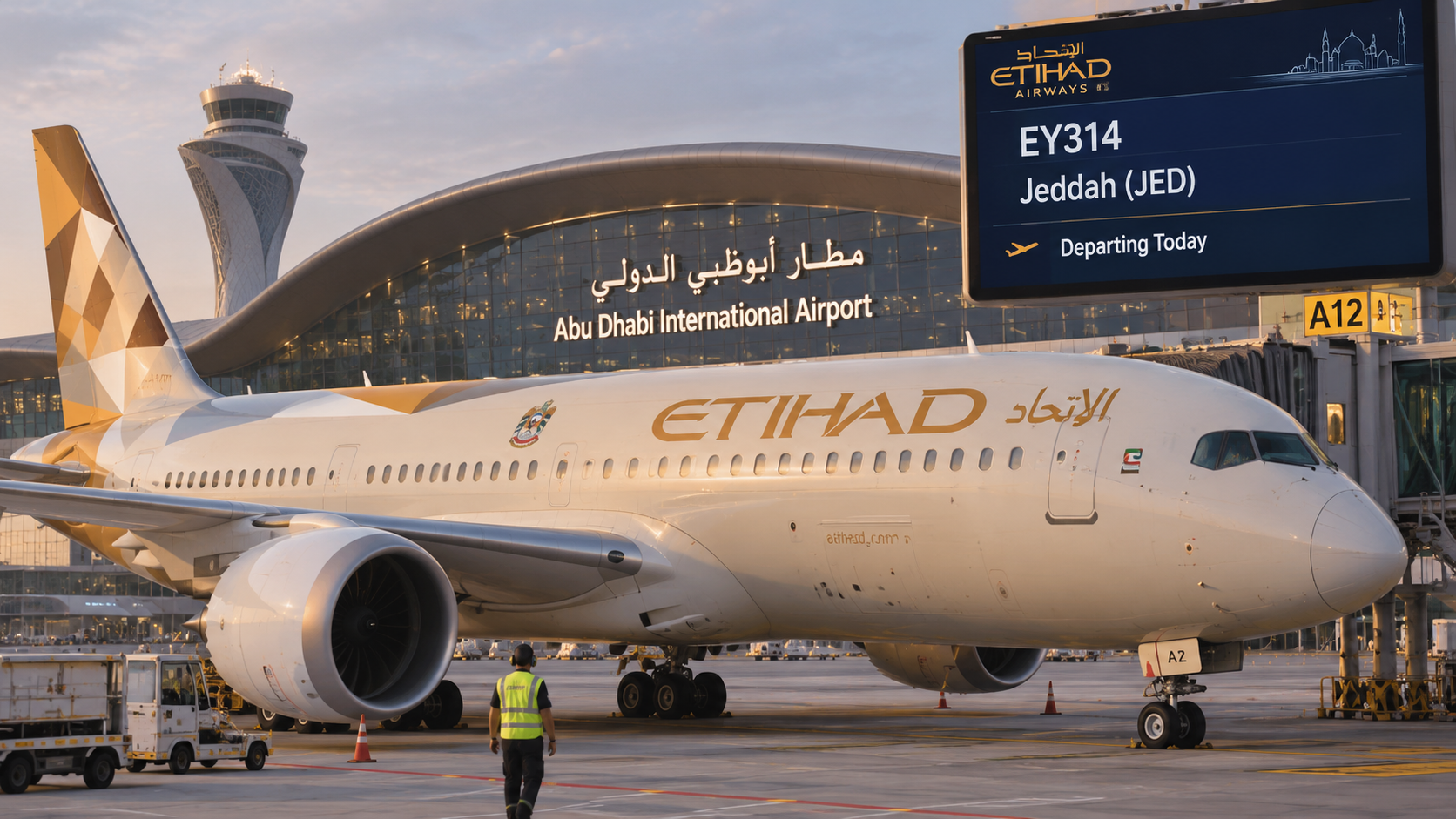
Etihad Resumes Abu Dhabi–Jeddah Flights; Riyadh and Dammam Cancelled Until 19 November
Etihad Airways restarted its daily Abu Dhabi–Jeddah service on Friday, but flights to Riyadh and Dammam remain suspended until 19 November. Flydubai is also restoring Saudi routes in stages, and passengers are urged to check their flight status before travelling.
Travellers heading from the UAE to Saudi Arabia have some relief and some continued disruption today, as Etihad Airways brings back its Jeddah flights while keeping services to Riyadh and Dammam suspended for nearly two more weeks.
Etihad's Jeddah service returns
Etihad Airways resumed its daily Abu Dhabi–Jeddah service on Friday, 6 November. The airline's latest travel advisory lists four flights returning to the schedule: EY601 and EY603 from Abu Dhabi to Jeddah, and EY602 and EY604 on the return leg.
The same advisory confirms that all flights between Abu Dhabi and both Riyadh and Dammam will stay cancelled until Thursday, 19 November. The carrier cites continuing regional disruption.
Flydubai restores routes in stages
Flydubai had earlier cancelled all flights to Abha, Dammam and Riyadh through 5 November. According to the airline's website, the picture now varies by destination:
Jeddah: flights from Dubai are available from 6 November.
Dammam: services are listed from 10 November.
Abha and Riyadh: flights are available from 17 November.
Passengers should be aware that these dates reflect what airline systems show at the time of writing, and schedules can change at short notice.
Wider picture across UAE carriers
Etihad and flydubai are not alone in adjusting their networks. Emirates and Air Arabia continue to report selected cancellations or altered schedules on Saudi routes as well. Iranian-operated flights to and from the UAE remain suspended, and Dubai–Tel Aviv services are also affected, although Etihad continues to operate between Abu Dhabi and Tel Aviv.
On a more positive note, other international airlines are gradually restoring some services to Dubai, though several suspensions remain in place. The overall pattern is one of a network recovering unevenly, with some corridors reopening while others stay closed.
The regional backdrop
The Saudi route changes unfold against continuing hostility in the wider region. This week alone, Saudi air defences intercepted missiles and a drone, and shipping incidents have been reported around the Gulf and the Strait of Hormuz. Airlines rarely explain each scheduling decision in detail, but they typically review routes as conditions and safety assessments change.
Why the Saudi corridor matters
Saudi Arabia is one of the UAE's closest neighbours, and the routes between the two countries carry a steady mix of business travellers, families and pilgrims. Jeddah, in particular, is a gateway for many travellers heading to Makkah, so the return of even a limited schedule is significant for those who had put plans on hold.
The staggered restart also shows how carriers are managing risk. Rather than reinstating every route at once, airlines are bringing services back destination by destination, with Jeddah first, Dammam next and Riyadh and Abha later in the month. That approach lets them reassess conditions at each step. For passengers, it also means that a route listed as available today may not be available on every day of the coming fortnight, so checking the specific date of travel matters as much as checking the destination.
What passengers should do
For anyone with a booking in the coming weeks, a few sensible steps can reduce stress:
Check directly with your airline. Use the carrier's official website or app, rather than relying on third-party listings or social media posts.
Confirm before leaving home. A flight that is shown as operating in the morning can still be amended later in the day.
Keep contact details up to date. Airlines usually send changes by email, SMS or in-app notice.
Ask about rebooking or refund options. If your flight falls within a cancelled period, the airline's customer service can explain what is available under its own policy.
Build in flexibility. Where possible, avoid tight onward connections that depend on a single Saudi leg.
Looking ahead
The next dates to watch are 10 November, when flydubai lists the return of Dammam flights, 17 November for Abha and Riyadh, and 19 November, when Etihad's current cancellations on Riyadh and Dammam are due to end. Each is a planning milestone rather than a guarantee, and further extensions remain possible if conditions require.
For now, the resumption of Jeddah flights is a modest but welcome step for families, pilgrims and business travellers who rely on the corridor between the UAE and Saudi Arabia.


Leave a comment
Your email address will not be published. Required fields are marked *