
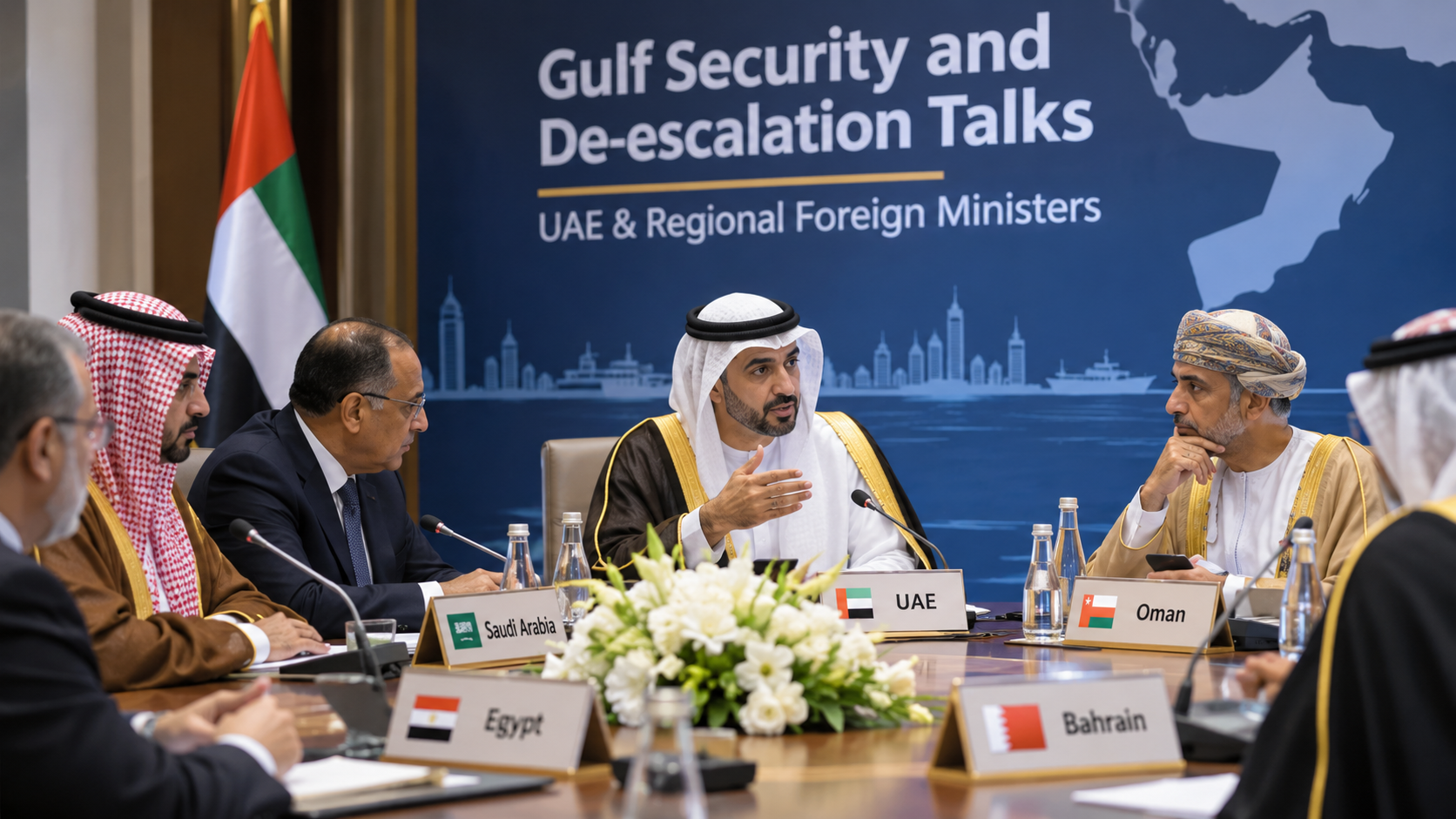
UAE Joins Regional Diplomacy Push as Iran Contacts Gulf Capitals
UAE Foreign Minister Sheikh Abdullah bin Zayed discussed de-escalation with Iran's Abbas Araghchi, as Qatar, Oman, Saudi Arabia and Egypt held their own contacts. No public agreement has emerged, and fighting and threats continue in parallel.
A flurry of telephone diplomacy across the Gulf on Friday suggests regional governments are trying to build a path away from further escalation, even as the military and political temperature around Iran remains high.
Abdullah bin Zayed speaks with Araghchi
Sheikh Abdullah bin Zayed Al Nahyan, the UAE Deputy Prime Minister and Minister of Foreign Affairs, held a call with Iranian Foreign Minister Abbas Araghchi. According to the reports, the UAE side stressed the importance of de-escalation and of diplomatic efforts aimed at strengthening regional security.
The call was one of several Araghchi held with regional counterparts. He also spoke with Saudi Foreign Minister Prince Faisal bin Farhan, while Oman and Iran discussed practical arrangements for restoring safe navigation through the Strait of Hormuz. Egypt's Foreign Minister Badr Abdelatty separately urged flexibility and compromise in his own conversation with the Iranian minister.
Taken together, the contacts show a region trying to keep multiple channels open at once. Few of the calls were reported in detail, so the substance of what was discussed beyond the stated emphasis on dialogue remains limited.
Washington and Doha talk
In another sign of diplomatic activity, US President Donald Trump spoke by phone with Qatar's Emir, Sheikh Tamim bin Hamad Al Thani. According to Qatar's Emiri Diwan, the Emir emphasised dialogue and peaceful means for resolving disputes.
The conversation took place as the White House considers its next step. US officials have discussed renewed strikes, sustained economic pressure and a negotiated deal, and no decision on a new large-scale operation has been announced.
The picture is far from calm
Diplomacy is unfolding against a tense backdrop. Iran's army has warned that fresh American attacks would prompt retaliation against US assets worldwide, and Tehran says the Strait of Hormuz will not be fully reopened unless its conditions are met.
Elsewhere in the region, the security situation remains volatile:
Saudi Arabia's air defences intercepted two ballistic missiles that the Saudi-led coalition said were launched by Yemen's Houthi movement towards Najran, as well as a drone over the Mecca region. The coalition did not confirm any casualties, and civil defence later lifted an emergency alert in Najran.
Iraq has activated nuclear emergency plans and stepped up radiation monitoring along its border with Iran, according to a report by Shafaq. The measures are precautionary. There has been no confirmed radiation leak or new US strike on an Iranian nuclear facility, and officials view the risk of fallout reaching Iraq as low.
Russian President Vladimir Putin met Iran's security chief Mohsen Rezaei in Moscow on Thursday. Press TV reported that Rezaei delivered a letter from Iran's Supreme Leader, Mojtaba Khamenei.
Politics in Washington add another layer
The American domestic debate is also feeding into the picture. US Defence Secretary Pete Hegseth has rejected an impeachment effort led by Republican Congressman Thomas Massie, who accuses him of conducting hostilities without congressional authorisation. Massie plans to seek a House vote when lawmakers return next week. President Trump has said he intends to keep Hegseth in his administration.
The dispute follows the Democrats' success in the midterm elections, which will give the party control of both chambers when the new Congress convenes in January.
What the diplomacy can and cannot deliver
For the UAE, the emphasis on de-escalation is consistent with the country's long-standing interest in stable shipping, open airspace and predictable trade. Calls between foreign ministers rarely produce immediate breakthroughs, however, and none of Friday's contacts has yielded a publicly announced agreement to end the conflict.
Still, the sheer number of parallel conversations matters. They keep communication lines intact between parties that are otherwise trading threats, and they give mediators such as Qatar and Oman room to work on narrower, practical questions, including the conditions for safe passage through Hormuz.
What happens next
Watch for three signals in the days ahead: whether the White House announces a decision on military action, whether any Gulf-brokered arrangement on navigation takes shape, and whether Tehran's public conditions for reopening the strait soften or harden. For UAE residents, the near-term effects are most likely to show up in flight schedules, shipping costs and market sentiment rather than in any single headline.

Leave a comment
Your email address will not be published. Required fields are marked *