
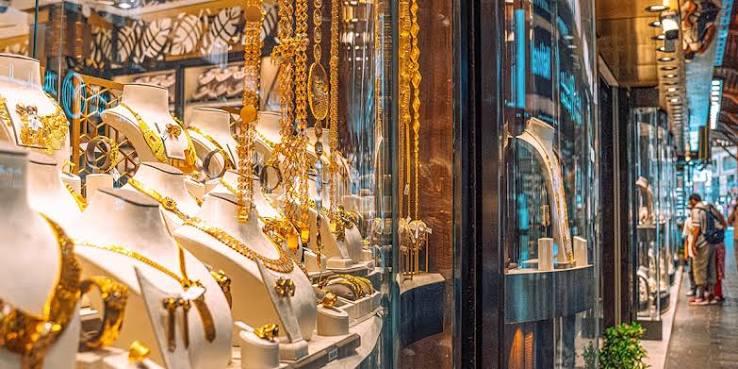
Dubai Gold Prices Climb Again as Geopolitical Jitters Push Investors Toward Safe Havens
Gold prices in Dubai ticked higher again today, extending a year-long rally driven by geopolitical tension, inflation concerns and rising sovereign debt. Analysts say commodities have emerged as 2026's best-performing asset class as investors seek shelter from ongoing global uncertainty.
Another day, another uptick for Dubai's gold market
Shoppers browsing Dubai's gold souks today found prices nudging higher once again, continuing a rally that has made 2026 a standout year for the precious metal. According to the Dubai Gold & Jewellery Group's morning rates, 24-karat gold was trading at AED 518.50 per gram, with 22-karat at AED 480.25, 21-karat at AED 460.50, and 18-karat at AED 394.50. Separate market data pegged the broader spot-linked rate slightly above AED 508 per gram, up marginally from the previous session, reflecting the kind of steady, incremental gains that have characterised the market for much of the year.
While a few dirhams' movement might seem modest on any single day, the bigger story is the trend line behind it. Gold has quietly become one of the standout performers of 2026, a year defined by persistent inflation pressures, elevated sovereign debt levels, ongoing geopolitical conflict, and repeated disruptions to global supply chains. Investors looking for protection from that combination of risks have increasingly turned to physical assets that governments cannot simply print more of — and gold sits at the top of that list.
Why the rally has legs
Several forces are converging to keep gold in demand. Chief among them is the continuing US-Iran conflict, which has kept regional risk premiums elevated and pushed some investors toward traditional safe havens rather than riskier equities or emerging-market assets. Currency dynamics matter too: since the UAE dirham is pegged to the US dollar, movements in the greenback filter directly into local gold pricing and into the value of money that expatriate workers send home. A stronger dollar tends to mean better remittance value for residents sending money to countries like India, Pakistan and the Philippines, which is one reason many UAE residents track currency and gold movements closely as part of their regular financial routine.
Beyond currency effects, broader macroeconomic anxiety has played a significant role. Persistent inflation in major economies, concerns about the sustainability of government debt loads, and ongoing supply-chain disruption linked to regional conflicts have all pushed institutional and retail investors alike toward commodities as a hedge. Gold's traditional role as a store of value — one that doesn't depend on the health of any single company, currency or government — has made it a natural beneficiary of this environment.
What it means for Dubai's gold trade
For Dubai, long marketed as the "City of Gold," sustained high prices carry a mixed set of implications. On one hand, elevated prices tend to support the value of gold held by the emirate's many jewellery retailers, traders and investors, some of whom deal in gold not just as adornment but as a serious investment vehicle. Dubai's gold souks and trading platforms have built a reputation over decades as a global hub for buying, selling and storing the metal, and periods of high prices often reinforce that positioning by drawing in international buyers looking to trade or invest.
On the other hand, higher prices can dampen retail demand for gold jewellery among everyday shoppers, particularly around wedding season and other traditional gift-giving occasions when gold purchases in the region typically spike. Retailers in Dubai's gold districts have had to adjust, often emphasising smaller, lighter pieces or highlighting making-charge discounts to keep jewellery accessible even as the underlying metal becomes more expensive.
A market residents are watching closely
Financial commentators tracking the UAE market note that gold's performance this year has outpaced many traditional asset classes, reinforcing its reputation as a hedge during turbulent periods. Analysts caution, though, that gold prices can move quickly in either direction depending on how geopolitical events unfold — particularly any shifts in the US-Iran conflict, central bank policy decisions, or unexpected currency moves. For now, market watchers are advising that anyone considering gold as an investment pay close attention to daily rate fluctuations rather than treating any single day's price as a long-term benchmark.
For everyday residents, the practical takeaway is simple: gold buying decisions, whether for jewellery or investment, are best made with an eye on the broader trend rather than any one day's headline number. With global uncertainty showing few signs of easing in the near term, many analysts expect gold to remain a closely watched barometer of investor sentiment in Dubai and beyond well into the final quarter of 2026.
Leave a comment
Your email address will not be published. Required fields are marked *