
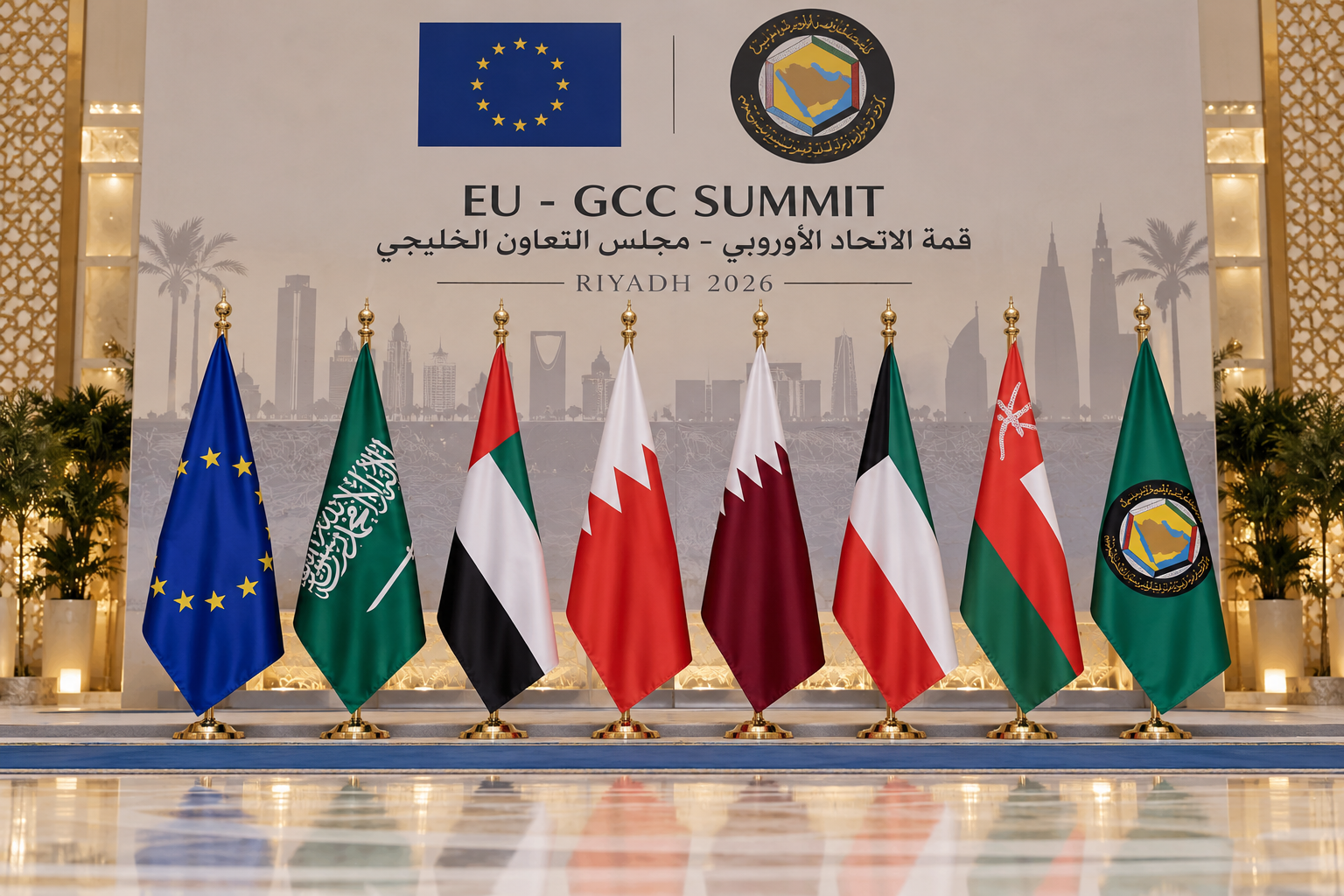
Visa-Free Schengen Travel for Saudis Draws Closer Ahead of EU-GCC Summit in Riyadh
The GCC's secretary-general says a decision to begin waiving Schengen visas for Saudi, Qatari, Omani, Bahraini and Kuwaiti citizens is "very close" and could be announced at the EU-GCC summit in Riyadh on Oct. 24. A free trade agreement is not expected to be settled at the same meeting. The UAE is currently the only Gulf state with visa-free short stays in the Schengen Area.
.
GCC Citizens Could Soon Get Visa-Free Schengen Travel as EU-GCC Summit Nears
RIYADH — Gulf citizens who have long queued for Schengen visas may soon see the start of a change. The Gulf Cooperation Council's secretary-general says the process of waiving the requirement for five member states is "very close" to beginning, with an announcement possible when European and Gulf leaders meet in Riyadh on October 24.
Jasem Mohamed Al-Budaiwi made the remarks on the Arab Views podcast, hosted by Faisal J. Abbas, in an interview recorded in Manama on the sidelines of the Made in GCC 2026 forum and exhibition. He said the second EU-GCC summit would bring many deliverables, and that visa-free travel for Saudi, Qatari, Omani, Bahraini and Kuwaiti citizens was among those he expected to hear positive news on.
What Is Actually Being Promised?
It is worth being precise about the wording. Al-Budaiwi spoke of the beginning of a process, not an immediate lifting of visa rules. No timetable has been given, and no formal EU position has been published in the material reviewed. Travellers should not expect to board a plane to Paris or Madrid without a visa the day after the summit.
At present, only the UAE has visa-free access for short stays in the Schengen Area. The other five GCC states, Saudi Arabia among them, still require a visa. Saudi nationals can already use facilitated procedures, including multi-year multiple-entry visas introduced in 2024, which have eased the burden but not removed it.
A Long Road to This Point
The GCC, founded in 1981 and headquartered in Riyadh, brings together Bahrain, Kuwait, Oman, Qatar, Saudi Arabia and the UAE. The idea of visa-free travel for its citizens has been on the table for years. At the first EU-GCC summit in Brussels in October 2024, leaders agreed to meet every two years and said they would keep working on practical steps toward safe, mutually beneficial visa-free travel. They also decided that the next summit would be held in Saudi Arabia in 2026, which is the meeting now approaching.
Gulf officials have consistently argued that their citizens are a positive presence in Europe, contributing through tourism, education and trade. For Saudi Arabia, which is investing heavily in tourism and global connectivity as part of its economic diversification, smoother travel in both directions would fit its wider strategy.
Trade Talks Lag Behind
The same optimism does not extend to trade. Al-Budaiwi said a GCC-EU free trade agreement is unlikely to be settled at the summit, in contrast with the deal the Gulf bloc signed earlier this year with the United Kingdom.
He said negotiations with Brussels have run for many years without reaching a conclusion, and that a fresh start is now needed. In his account, the European side is pressing for additional provisions in the agreement, including human rights clauses, which the GCC believes should be removed.
The economic stakes are considerable. Figures published by Oman's foreign ministry for 2023 put GCC exports to the EU at $102.9 billion, a relationship that already runs deep without a comprehensive trade pact.
Answering the Unity Question
The interview also touched on regional politics. Al-Budaiwi rejected suggestions that the Gulf bloc has been left divided or poorly coordinated since the escalation with Iran began seven months ago. He also addressed questions about relations with Tehran and about the GCC's stance on the escalation in Yemen, including whether Gulf states are ready to send troops against the Houthis. Those answers are available in the full episode.
That context matters for Riyadh's hosting role, and it explains why Gulf officials are keen to show that the bloc speaks with one voice. A summit held while Saudi cities are under Houthi attack and the wider region is unsettled will test the Gulf's ability to present a united front to its European partners.
What It Means for Travellers
For ordinary Saudis and other Gulf citizens, the practical picture will not change on October 24 alone. If the process is formally launched, the next steps would likely involve technical work and approvals on the European side before any waiver takes effect. Until then, current Schengen visa rules still apply, and travellers should keep applying through the usual channels and follow official consulate guidance.
Still, the signal matters. After years of discussion, a public commitment from both blocs to begin the process would mark the clearest progress yet on one of the Gulf's most persistent diplomatic requests. All eyes now turn to Riyadh in two weeks.
Leave a comment
Your email address will not be published. Required fields are marked *