
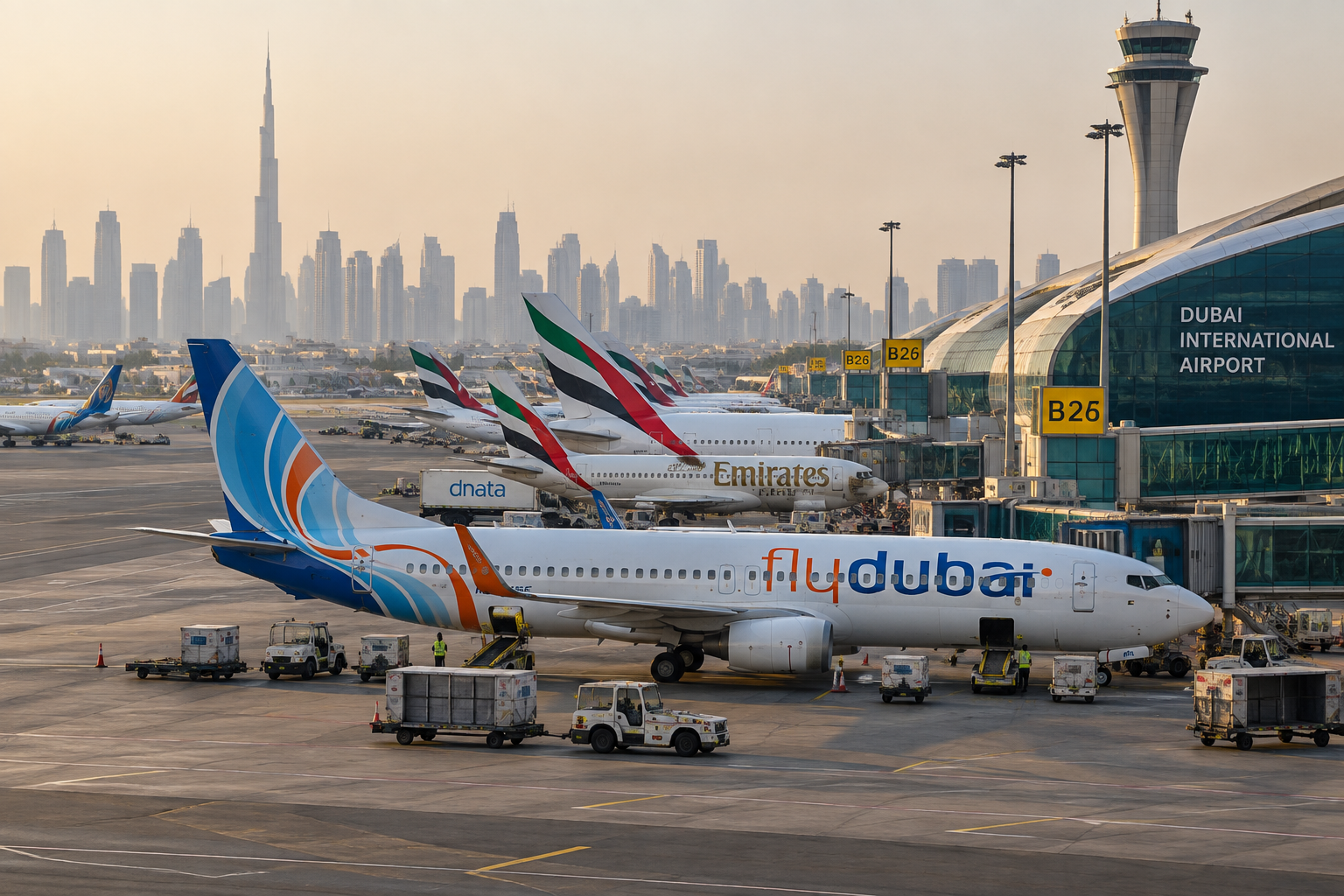
US–Iran Tensions Rise as Airlines Extend Dubai Flight Suspensions: What UAE Residents Should Know
Iran's Revolutionary Guards have warned of a tougher response to any US or regional threat, while Washington sends more warships to the Middle East. Several international airlines have suspended Dubai services into late October or beyond.
US–Iran Tensions Rise as Airlines Extend Dubai Flight Suspensions: What UAE Residents Should Know
DUBAI, 3 October 2026 — Regional tension climbed again overnight. Iran issued a fresh warning to the United States, Washington moved additional naval forces towards the Middle East, and a growing list of foreign airlines confirmed they will keep their Dubai services on hold for weeks or months.
For residents and visitors in the UAE, the practical consequence is simple: flight plans need checking more often than usual.
Iran's warning
Iran's Islamic Revolutionary Guard Corps (IRGC) said it would respond "decisively, immediately, painfully and more lethally" to any threat from the United States or its regional partners, Iranian outlet Mehr News reported. The Guards said any such response could exceed Operation True Promise II, the October 2024 missile attack on Israel that involved roughly 200 ballistic missiles. They also claimed to hold detailed intelligence on US and Israeli assets in the region.
The language is characteristically forceful, and the statement cannot be independently verified. But it lands at a delicate moment. Khaleej Times reports that the 60-day ceasefire between Washington and Tehran has lapsed and that the United States does not intend to extend it. The wider regional war began on 28 February.
A larger US naval presence
According to Gulf News, the aircraft carrier USS Theodore Roosevelt and the Makin Island Amphibious Ready Group are heading to the region. If both arrive as planned, the United States could have three carrier strike groups and two amphibious groups, with more than 2,000 additional Marines, in the area by the end of November.
Gulf News also noted initial reports, citing US officials, that President Donald Trump is weighing the option of sending ground troops into Iran after the November midterm elections. Those reports describe deliberation rather than a decision, and Washington has not announced any such plan.
Houthi fire towards Saudi Arabia
Further south, the Houthis continued launching missiles at Saudi Arabia. The Saudi-led coalition said it intercepted three ballistic missiles aimed at Khamis Mushait. In the Asir region, falling debris from an intercepted missile injured one resident and damaged a prayer room and vehicles.
Which airlines have paused Dubai flights
The following suspensions were listed in Gulf News's morning update on Saturday:
Air France: Dubai flights suspended until 24 October
KLM: Dubai, Riyadh and Dammam suspended until 24 October
Wizz Air: Dubai and Abu Dhabi suspended until 24 October
Singapore Airlines: Dubai suspended until 24 October
ITA Airways: Dubai suspended until 24 October
airBaltic: Riga–Dubai suspended until 24 October
Lufthansa Group: Dubai services to resume gradually from 25 October
British Airways: Dubai services due to return in November
Cathay Pacific: Dubai and Riyadh passenger flights cancelled through 31 January 2027
Finnair: Dubai and Doha suspended until 27 March 2027
Virgin Atlantic: Dubai flights suspended until October 2027
Korean Air: Incheon–Dubai suspended until further notice
Turkish Airlines has restarted flights to Dubai and Abu Dhabi, although its Tehran services remain suspended.
Separately, flydubai has paused all Israel flights after the FZ1073 incident, and Emirates has stopped its flydubai codeshare operations to and from Tel Aviv. The UAE has also halted flights by Iranian airlines to and from the country until further notice, which means carriers such as Iran Airtour cannot use Dubai International Airport.
What passengers can do
Airline schedules in this environment can change at short notice. A few sensible habits will reduce the risk of a wasted journey:
1. Check the airline directly. Use the carrier's official website or app rather than a third-party booking site.
2. Switch on alerts. Make sure your contact details are correct so that text and email notices reach you.
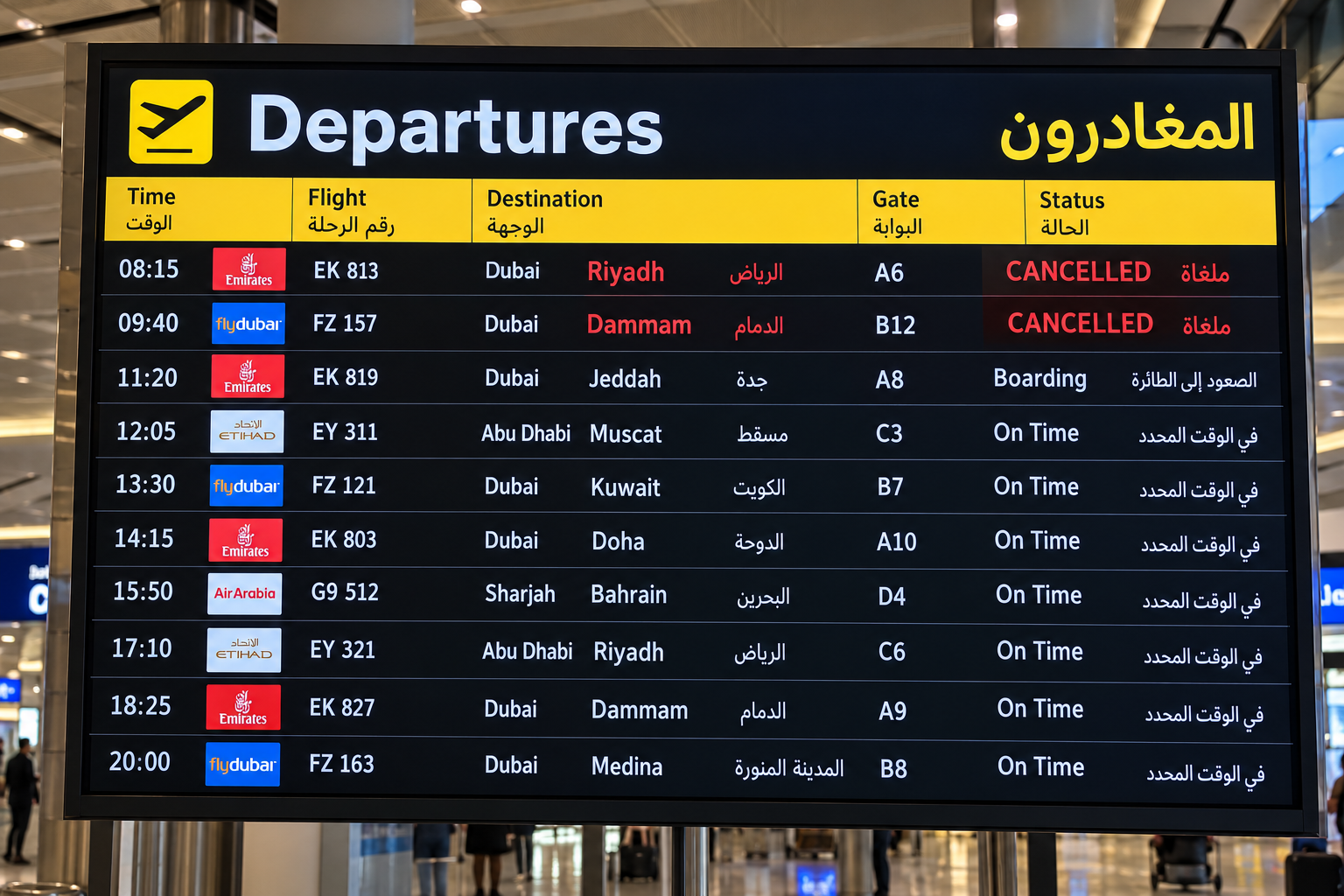
3. Do not head to the airport unless told to. If your flight is cancelled, contact the airline or your travel agent about rebooking or a refund.
4. Look at the operating carrier on codeshare tickets. The airline whose name is on your ticket may not be the one flying the aircraft.
5. Allow extra time. Busier terminals and last-minute changes can slow check-in.
The bigger picture
Each suspension is the airline's own decision. Several carriers, including Turkish Airlines, have resumed flights, and others plan to return from late October or November. But the length of some of the pauses, stretching well into 2027 for a few airlines, suggests that some operators do not expect a quick return to normal.
The effects reach beyond travel. Fuel prices in the UAE have risen sharply since the conflict began, a trend covered in our separate report on October's petrol rates.
With the ceasefire gone and both sides trading warnings, the next few weeks are likely to be decisive. This newsroom will report any change in airline schedules or official guidance as soon as it is confirmed.
Leave a comment
Your email address will not be published. Required fields are marked *