
UAE Airports Stay Open on Day 220 of US-Iran Conflict, but Flight Cuts and Higher Fuel Costs Linger
Daily life in the UAE continues as normal on day 220 of the US-Iran conflict, with airports open and no security alerts. Residents are still feeling the effects through longer flights, extended airline suspensions and a third straight monthly rise in fuel prices.
UAE Airports Stay Open on Day 220 of US-Iran Conflict, but Flight Cuts and Higher Fuel Costs Linger
Life across the Emirates carried on as usual on Wednesday, even as the US-Iran conflict reached its 220th day and its effects continued to ripple through flight schedules, fuel prices and shipping lanes.
No security alerts or evacuations are in force inside the UAE. The Dubai Financial Market and the Abu Dhabi Securities Exchange remain stable, and essential services, including public transport, retail, schools and banks, are operating normally in Abu Dhabi, Dubai and the Northern Emirates. No local supply chain disruptions have been reported. In a small sign of normality, Dubai Parks and Resorts was due to reopen for its new season on Wednesday.
Still, the wider conflict is shaping everyday decisions for residents, from how to book holiday flights to how much to budget for fuel. Here is what matters today.
Airports are open, but schedules are shifting
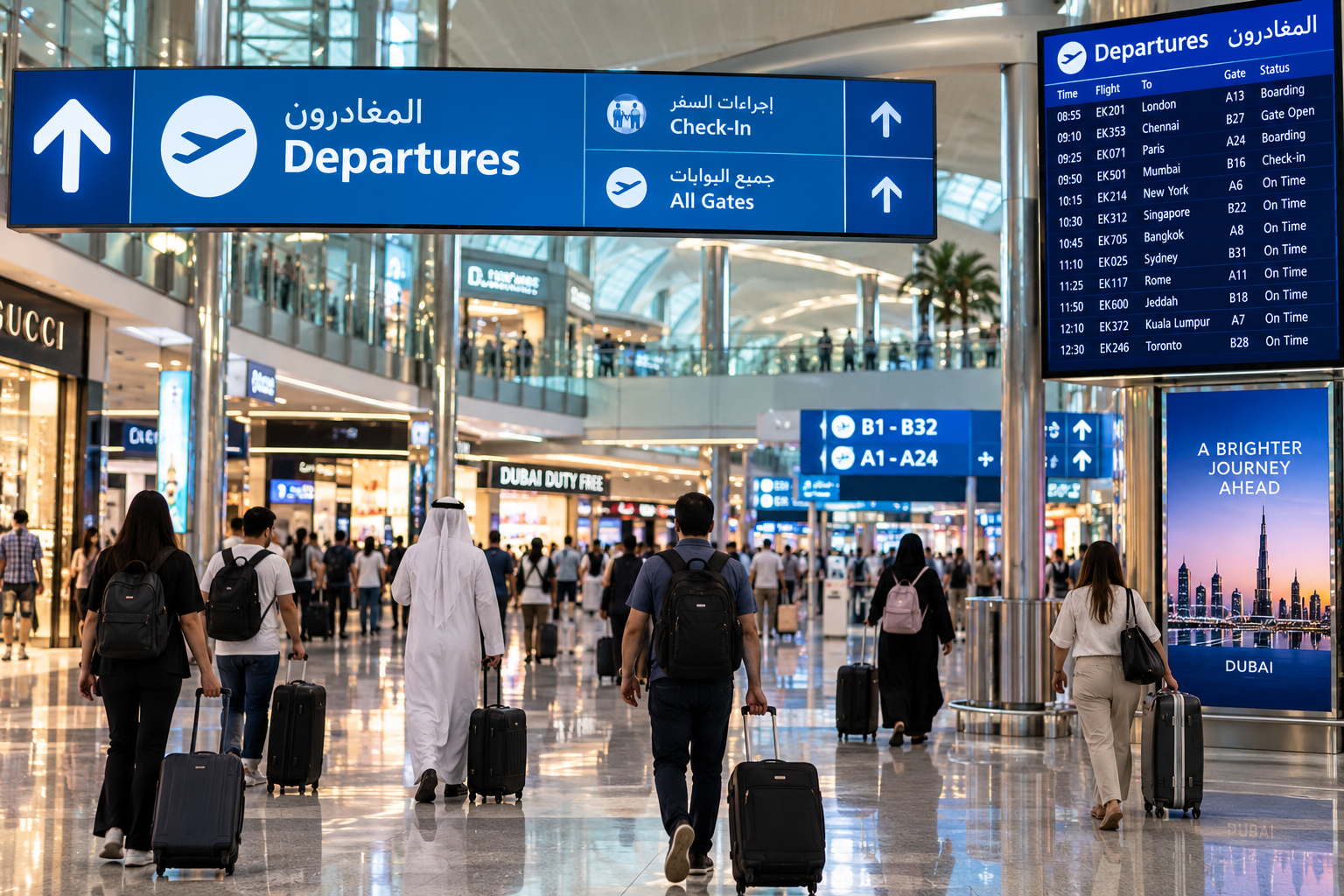
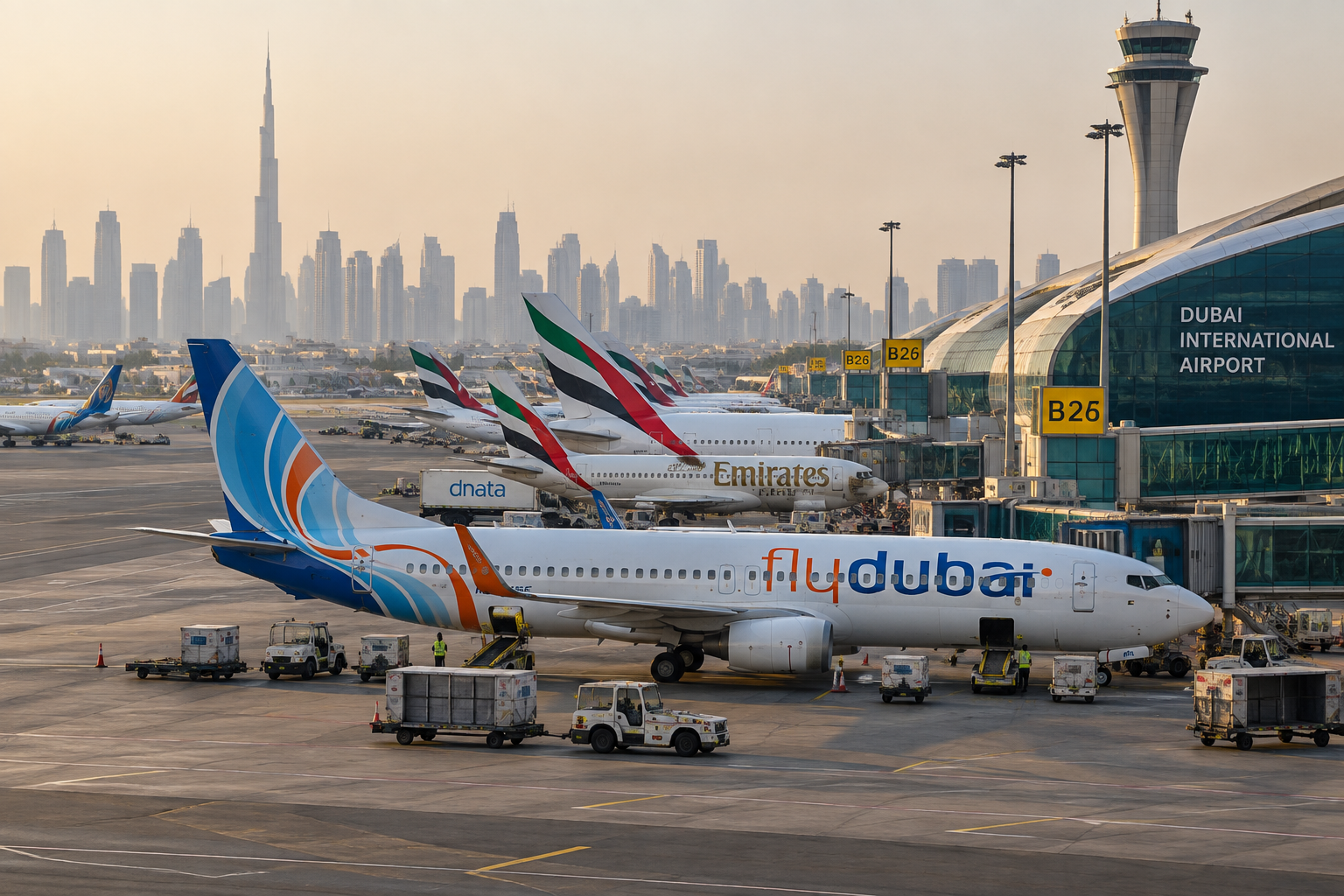
Dubai International, Al Maktoum International and Abu Dhabi's airport are all open. Emirates, Etihad, flydubai and Air Arabia are running most of their networks, but journeys are taking longer because aircraft are avoiding restricted airspace. Services linking Europe and Asia through Gulf hubs are adding roughly 60 to 120 minutes to flight times.
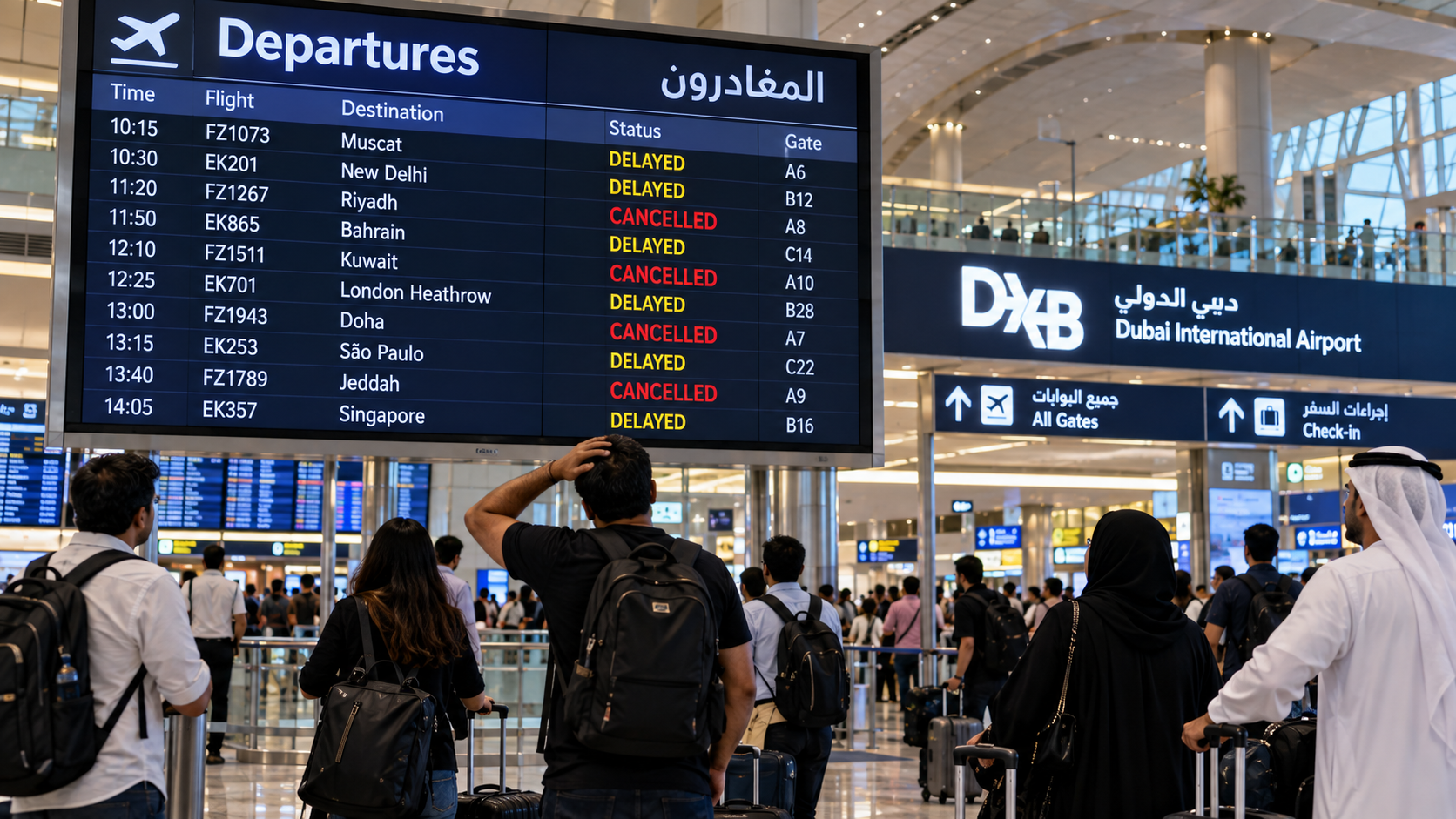
Some routes remain disrupted. Flights to and from Iran and Israel, as well as certain Saudi destinations such as Abha, are suspended or subject to sudden cancellation. Flydubai and Air Arabia have listed multiple cancellations for Wednesday, and some Emirates services from Dubai appear as unavailable on its website. Emirates has also suspended its codeshare operations with flydubai to and from Tel Aviv, while flights to Baghdad, Najaf, Erbil and Sulaimaniyah have been halted. The UAE's General Civil Aviation Authority continues to bar all commercial flights by Iranian carriers.
Foreign airlines extend their suspensions
Several international carriers are staying away for longer. Air France, KLM, SWISS and ITA Airways have extended suspensions of flights to and from Dubai and the wider region through 24 October. Korean Air, Singapore Airlines and Turkish Airlines have also extended suspensions or changed routes that would cross Gulf or Iranian airspace.
Wizz Air has pushed back its planned return to Abu Dhabi until early 2027, citing long detours around Iraqi airspace and fuel costs that make the route unviable for now.
Holiday travel: check before you go
The timing matters for families. Many British-curriculum schools break for half-term from 12 to 16 October, and the Dussehra and Diwali travel periods follow on 20 October and 8 November. UAE-India services are continuing to operate, but airlines are advising passengers to confirm their flight status directly before heading to the airport, because schedules can change at short notice.
Fuel and energy prices stay elevated
At the pump, petrol and diesel prices in the UAE rose for a third consecutive month in October, reflecting geopolitical risk and crude oil trading close to  101.50 a barrel, up 94 cents, while US benchmark WTI rose 71 cents to $90.15. A storm in the Gulf of Mexico that forecasters expect to strengthen into a hurricane added to the upward pressure, because offshore facilities there account for roughly 15 per cent of US crude output and about half of national refining capacity.
Shipping lanes under strain
Crude and liquefied natural gas tankers are still moving through the Strait of Hormuz, but maritime security agencies report near-daily projectile or drone threats. On Tuesday, India condemned a strike on an oil tanker owned by a Dubai-based company in the strait.
Higher insurance premiums and longer routes are keeping freight costs elevated, which feeds into surcharges on imported goods across the Gulf. Saudi-backed Yemeni government forces have also launched operations near the Bab Al-Mandab Strait, adding another layer of risk on Red Sea trade routes, and attacks on Saudi Arabia's East-West pipeline have briefly constricted a key bypass.
The political backdrop
The diplomatic exchange remains sharp. President Donald Trump told US media that his biggest difficulty in dealing with Tehran is that nobody knows who is really in charge. Iran's foreign ministry spokesman, Esmaeil Baghaei, rejected that claim, saying Washington understands how Iran's decision-making works and pointing instead to contradictory positions among US officials.
Practical advice for residents
Confirm your flight with the operating airline before leaving for DXB, AUH or SHJ.
Allow extra time for long-haul journeys that pass through restricted airspace, which can take one to three hours longer.
Use official sources, such as the UAE Ministry of Foreign Affairs and the GCAA, rather than unverified social media posts.
Register with your embassy if you hold a foreign passport. Several Western embassies have urged citizens to use consular registration tools.
For now, the picture inside the UAE is one of continuity: open airports, working markets and normal services. The costs of the conflict are showing up instead in travel times, flight availability and the price of fuel.
Leave a comment
Your email address will not be published. Required fields are marked *