
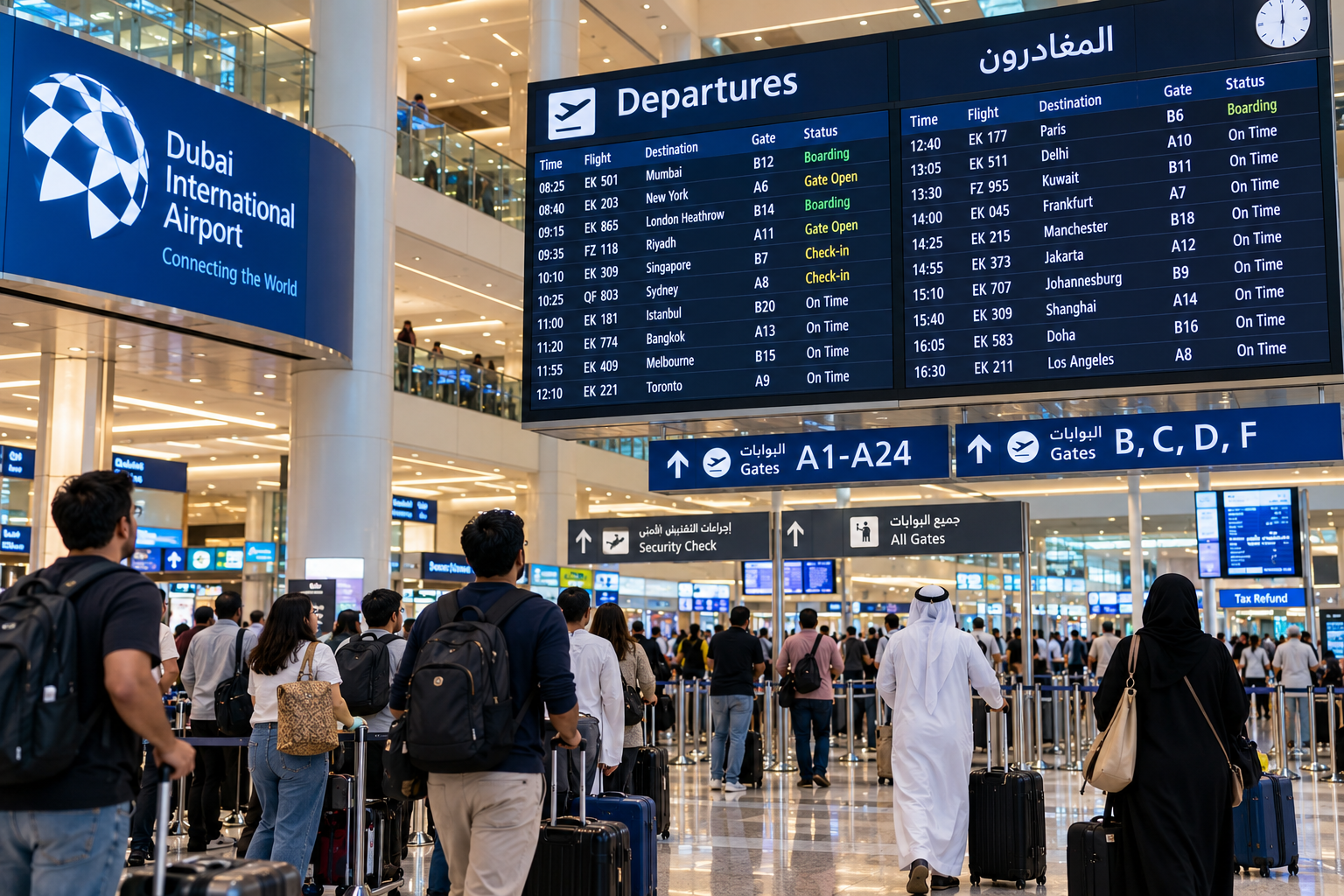
UAE Airports Add Winter Capacity as Saudi Route Cancellations Continue
Scheduled departing seats from UAE airports rose 23 per cent between June and October to 7.2 million, with up to 36 weekly Europe flights set to return by December. Flights to Saudi Arabia, however, remain cancelled or limited on several airlines, with Etihad's suspension extended to 5 November.
Travellers heading out of the UAE this winter may soon have more choice, even as flights to Saudi Arabia and a few other destinations remain disrupted.
The country's airports are rebuilding capacity at pace. Scheduled departing seats across UAE airports reached 7.2 million in October, a rise of 23 per cent from June, according to figures reported by Gulf News on Tuesday.
Where the new seats are
Dubai is leading the recovery. Dubai's airport recorded 4.6 million departing seats in October, followed by Zayed International Airport in Abu Dhabi with 1.7 million and Sharjah with 840,000.
Among airlines, Emirates offered 3.1 million seats in October. flydubai recorded the strongest growth of the major UAE carriers, expanding capacity by 27.5 per cent since June to 1.1 million seats.
The numbers point to a steady return of demand, and of aircraft, ahead of what is traditionally one of the busiest travel periods of the year in the Gulf.
Europe services return
There is also encouraging news for those planning trips to Europe. Up to 36 weekly flights between Dubai and Europe are expected to return from late October through December. Services to Athens and Manila are also being restored, giving passengers more options on routes that had been thinner in recent months.
Saudi routes remain the main pressure point
The picture is less settled for Saudi Arabia. Several airlines have extended cancellations on routes to the kingdom as regional security concerns continue.
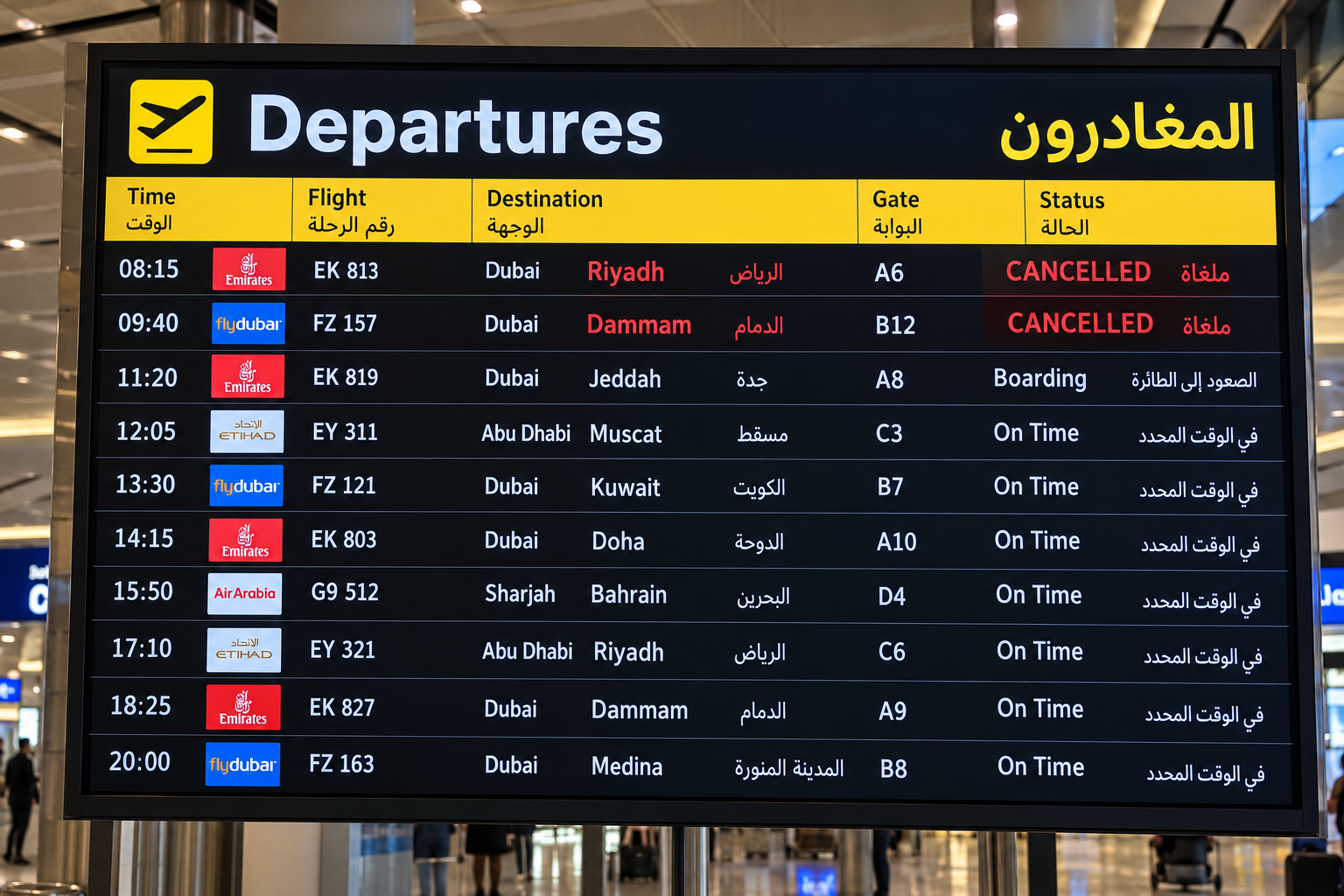
Etihad Airways has cancelled flights between Abu Dhabi and both Riyadh and Dammam until Thursday, 5 November. Four Abu Dhabi–Jeddah services, EY601, EY602, EY603 and EY604, are also cancelled through the same date. The airline says the situation is dynamic and that further changes are possible.
Emirates has listed cancellations on its Dubai services to Dammam, Jeddah and Riyadh, although its Dubai–Medina flights were reported as operating. flydubai has suspended services to Riyadh, Dammam and Abha until 29 October, while Air Arabia has cancelled a range of Sharjah flights to Saudi destinations without announcing a resumption date.
Other international carriers have also adjusted their schedules. Lufthansa Group has suspended Riyadh flights until 18 November, and British Airways plans a limited return to Riyadh from 3 November with one daily service, according to Gulf News' roundup. Air India and Air India Express have suspended Riyadh and Dammam until 7 November.
Other disruptions to note
Beyond Saudi Arabia, a handful of other services are affected. Flights operated by Iranian airlines to and from the UAE remain suspended until further notice. Emirates' codeshare operations with flydubai to and from Tel Aviv are suspended following a security incident on 30 September involving flydubai flight FZ1073, which diverted to Tabuk in Saudi Arabia.
At Dubai International Airport, several arrivals were listed as cancelled on Tuesday, including services from Madrid, Moscow, St Petersburg, Damascus and Jeddah. A number of other arrivals were delayed by anywhere between about half an hour and nearly three hours.
Not every disruption is related to the regional situation. Gulf News noted that some delays and cancellations are due to routine operational or technical reasons.
Advice for passengers
Airlines and airports consistently give the same guidance, and it is worth repeating:
Check your flight's status directly with the operating airline before leaving for the airport.
Watch for airline emails and text messages about cancellations or rebooking.
Contact your airline or travel agent if your flight is disrupted, and ask about refunds and alternatives.
Review ticket conditions, including rebooking rules and baggage allowances.
Allow plenty of time for check-in. flydubai, for example, closes check-in counters 60 minutes before departure unless passengers are told otherwise.
What the numbers mean
The contrast in Tuesday's data is telling. On one hand, airlines are adding seats, restoring European routes and building up for the winter peak. On the other, the cancellation lists show how quickly schedules can change when the security situation in the wider region shifts.
For passengers, the practical takeaway is to book with flexibility in mind, particularly for Saudi destinations, and to treat published resumption dates as provisional. Airlines have repeatedly said they will update schedules as conditions allow, and those updates can come at short notice.
Leave a comment
Your email address will not be published. Required fields are marked *