
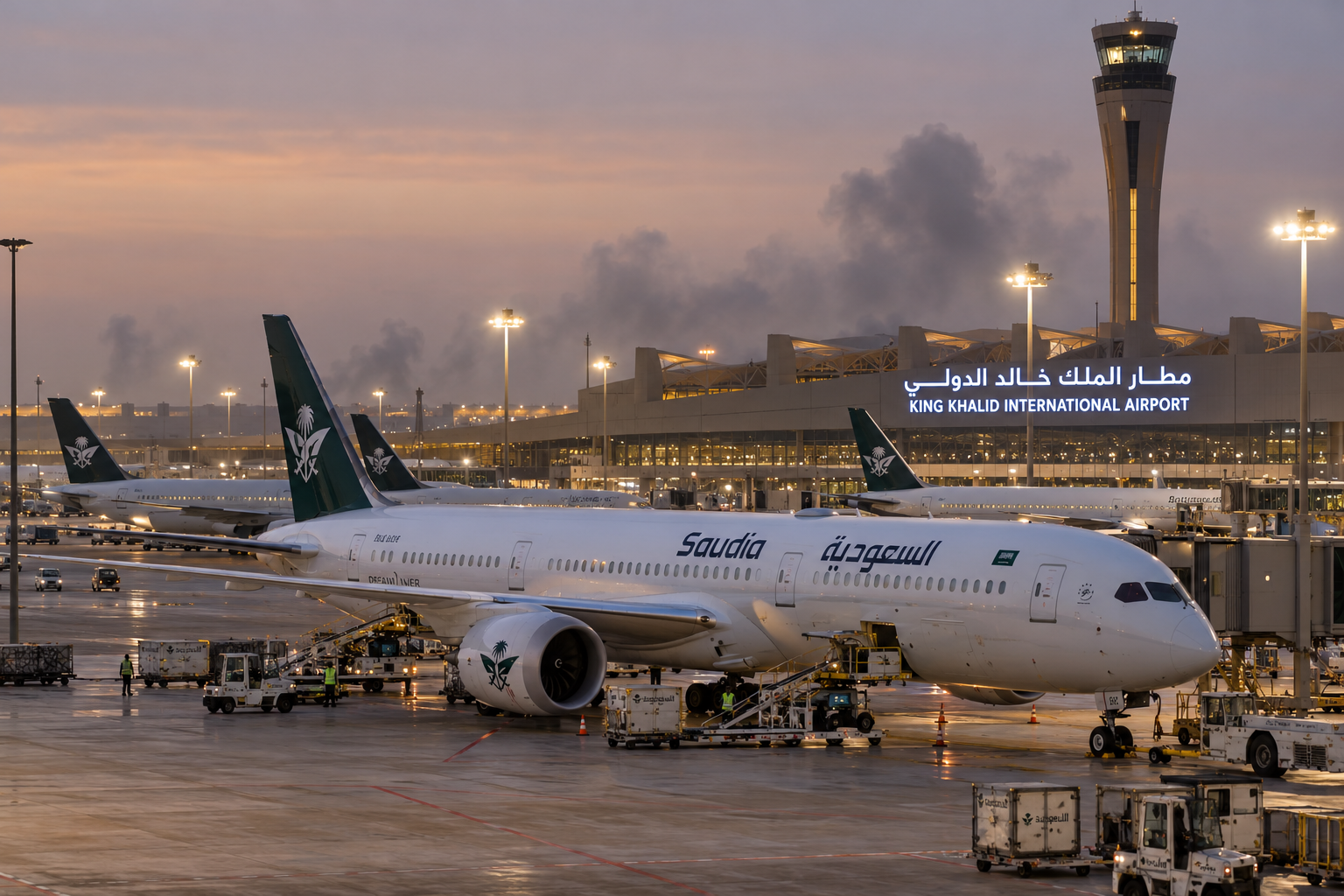
Saudia Pilot Killed in Riyadh Airport Attack as Kingdom Condemns Houthi Escalation
Two attacks on King Khalid International Airport in Riyadh on Thursday killed three Saudi nationals, including Saudia pilot Capt. Hamoud bin Ali Alkalthami. Saudi Arabia has called the strikes a blatant act of aggression, and condemnation has followed from abroad. Calls are growing, including from a UK peer, for the Houthis to be designated a terrorist group.
RIYADH — A Saudia captain is among three Saudi nationals killed after two attacks on King Khalid International Airport in Riyadh on Thursday, strikes that Saudi Arabia has branded a blatant act of aggression and blamed on the Iran-backed Houthi movement.
Saudia confirmed the death of Capt. Hamoud bin Ali Alkalthami. Saudi aviation authorities said the first attack targeted airport facilities, while the second struck an aircraft belonging to the national carrier. Both caused damage and disrupted flights. Several people were also injured, among them residents of different nationalities.
A pilot remembered
Tributes have poured in for Alkalthami, Arab News reported, as news of his death spread across the aviation community and beyond. For Saudia, the loss is deeply personal as well as operational: a serving captain of the country's flagship airline died while the airport he flew from was under attack.
The identities and circumstances of the other two victims were not detailed in the reports reviewed, and the full list of the wounded has not been published.
Condemnation and calls for action
A wave of condemnation followed. Arab News described strong denunciations of the strikes, and Pakistan's prime minister said his country stands firmly and in solidarity with Saudi Arabia. At the United Nations, Pakistan also condemned the Houthi attacks on the Kingdom.
In Britain, Lord Sarfraz urged a UK minister to designate the Houthis as a terrorist group in the wake of the airport assault, according to Arab News. Whether London acts on the call is not yet clear.
On Friday, Saudi Arabia's UN ambassador, Abdulaziz Alwasil, brought the matter to an emergency Security Council meeting. He described the airport strikes as a blatant act of aggression and warned that growing attacks on civilian infrastructure pose a direct danger to civilians and to aviation security. He also said the Houthis continue to receive outside military and technical support, an accusation the group has not been quoted answering in the reports reviewed.
Part of a wider pattern
The Riyadh attacks did not come in isolation. Saudi officials say Houthi missiles and drones have been aimed at Riyadh, Abha, Khamis Mushait, Jazan and Najran in recent weeks. They also cite an attempted strike on Makkah on Sept. 15 and a Sept. 29 attack on an electricity distribution station in Madinah.
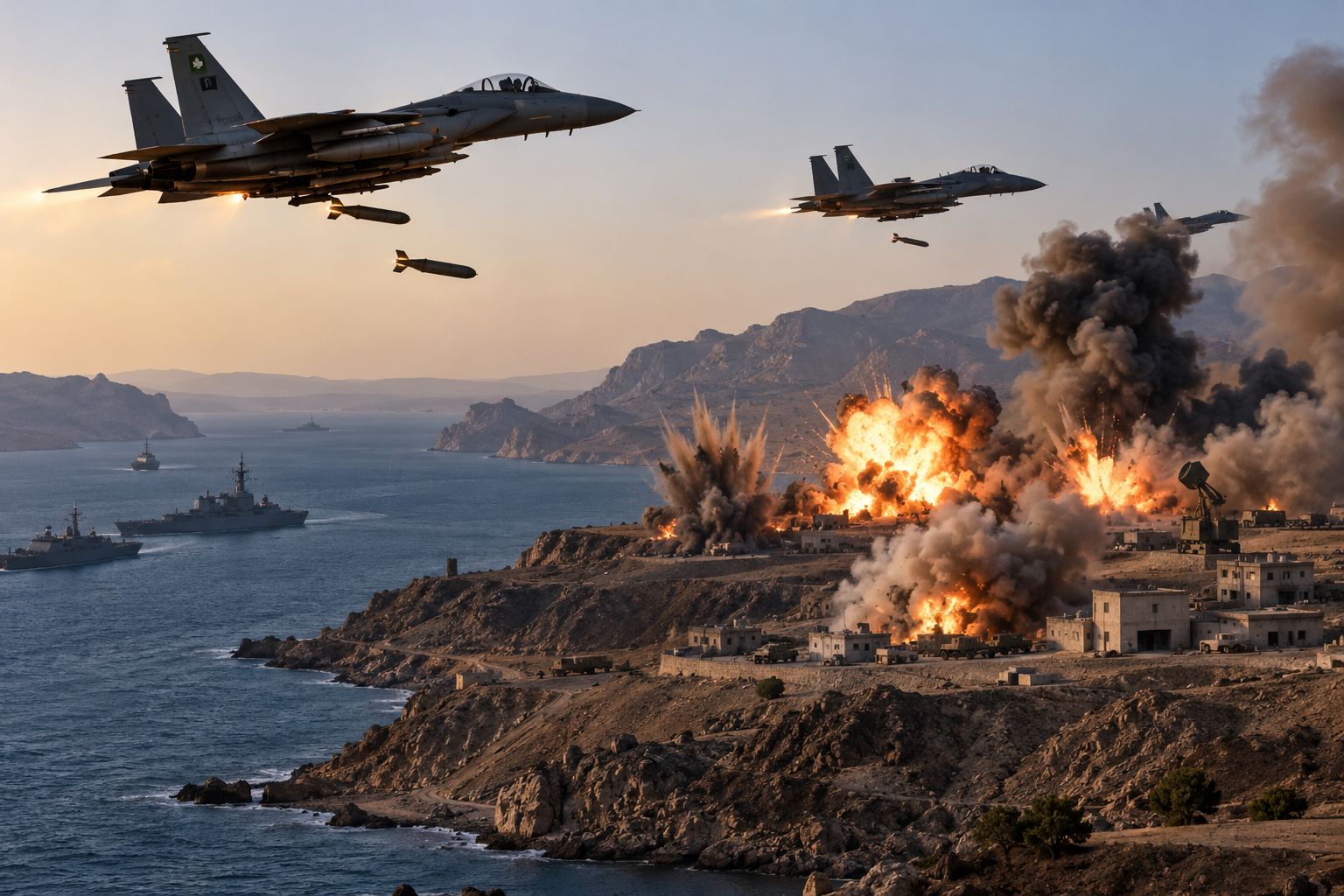
Within hours of the UN session, the Saudi-led coalition announced wide-scale air operations against the Houthi missile network, saying it intends to dismantle it. The coalition's figures have not been independently verified.
Support has also been signalled from allies. Pakistan's foreign ministry said it has substantial forces deployed in Saudi Arabia, Arab News reported, a sign of how the security picture around the Kingdom has drawn in partners. Alwasil, for his part, warned that the Houthis' behaviour threatens commercial shipping, energy supplies and international trade, not just Saudi territory.
Why airports are in the line of fire
Civilian airports and aircraft are among the most sensitive targets in any conflict. An attack can endanger passengers, crew and ground staff at once, and the consequences can ripple through schedules far beyond the airport itself. Riyadh's main international gateway is a hub for domestic and international travel, which is why an attack there carries such weight both for the public and for the aviation industry.
Saudi officials framed the strikes not only as an assault on the Kingdom but as a threat to civil aviation more broadly, and linked them to what they describe as a pattern of attacks on civilian sites that the international community should address.
What remains unclear
Several important details are still missing. Authorities have not published a full account of the damage to airport facilities or to the aircraft that was hit. It is not yet clear how long flight disruptions will last or how schedules will be adjusted. And while Saudi officials attribute the attacks to the Houthis, independent verification of the weapons used and their origin has not been made public.
Travellers using Riyadh's airport should check directly with their airline for the latest information on flights, and rely on official Saudi aviation announcements.
The human cost
Behind the diplomatic language is a loss that has touched families and colleagues. Three Saudi nationals are dead, and for many, Capt. Alkalthami has become the face of that loss. As the Kingdom presses its case at the United Nations and the coalition widens its operations in Yemen, the attack on Riyadh's airport is likely to remain central to how Saudi Arabia describes the stakes of the conflict.

Leave a comment
Your email address will not be published. Required fields are marked *