
UAE's Gargash Calls for "New Mindset" and Direct Arab-Iran Dialogue as UN Week Opens
Anwar Gargash, diplomatic adviser to the UAE President, says Arab states should hold their own talks with Iran rather than leaving regional strategy to Tehran and Washington. His remarks come as Trump prepares to meet Gulf officials in New York and oil prices ease on hopes of diplomacy.
The UAE has added its voice to the diplomatic push around the Iran conflict, with senior adviser Anwar Gargash arguing that Arab states must talk to Tehran directly. His comments on Gargash Iran dialogue set the tone for a week in which the United Nations General Assembly is expected to be dominated by the region's security crisis.
A call to widen the conversation
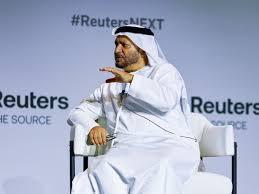
Speaking on Sunday at a panel hosted by Al-Monitor in New York, Dr Gargash, diplomatic adviser to President Sheikh Mohamed bin Zayed, said a "new mindset" was needed. His argument was that strategic discussions about the region's future should not be left largely to Tehran and Washington, because Iran sees itself as a regional hegemon and would rather deal with the United States on the big questions.
Dr Gargash said conversations about what kind of region its countries want, what kind of stability they seek and the development that depends on it could take place at an Iranian-American level, but should also happen at an Iranian-Arab level. "This is the period for greater diplomacy," he added.
He was also frank about the road ahead. Dr Gargash said the UAE and other countries would have to get used to dealing with an unstable Iran for some time. He stressed that instability did not necessarily mean a change of government in Tehran.
Abu Dhabi offers to mediate
The remarks were paired with an offer of help. Dr Gargash said Abu Dhabi remained willing to play a mediating role and urged Tehran to engage directly with both Washington and Arab states. He recalled personally delivering a letter from President Trump to Tehran in March 2025, when Abu Dhabi was trying to open channels between the two sides, and said his advice then, to speak directly with Washington, still stood.
The UN General Assembly backdrop
The timing matters. The 81st UN General Assembly is under way in New York with the theme "restoring trust, managing transformation." The High-Level General Debate begins on Tuesday and runs until the following Monday, and President Trump is expected to speak on the opening day.
Iraq and Jordan will join President Trump's meeting with Gulf officials during the high-level week, and Egypt is also likely to take part. Iran, its proxies and the future of the US-Iran conflict are expected to dominate the talks.
Regional security is not an abstract topic on that agenda. The Houthis' expanding control around the strategic Bab Al Mandeb strait and their escalating attacks on Saudi Arabia are a key item. US Ambassador to the UN Mike Waltz has warned that Iran has shifted toward arming the Houthis with more sophisticated weapons, including drones and cruise missiles.
Washington's options and Tehran's silence
In remarks to Fox News on Sunday, President Trump said he was weighing three options for ending the conflict: military destruction of Iran, letting it deteriorate economically, or reaching a deal. He acknowledged that Washington had received a list of demands from Tehran and said he was open to meeting Iranian President Masoud Pezeshkian, who is due in New York for the assembly. There is no indication yet whether Tehran wants a presidential meeting.
Markets react to the diplomacy
Energy markets have started to price in the possibility of movement. Brent crude fell 2.12 per cent to $101.67 a barrel on Monday morning, its fourth straight daily decline and the lowest level in a week. Analysts attributed the drop to a slowly fading risk premium as hopes build that diplomacy in New York could ease the conflict.
The caution is warranted. Missile and drone attacks last week forced Saudi Arabia to shut its East-West pipeline, and Saudi Aramco has suspended crude supply to European customers for next month. One Julius Baer economist said the disruption looks less significant than first feared, noting the market is "not running out of oil."
Why it matters for the UAE
For a country whose airports, ports and financial centres depend on regional stability, the argument Dr Gargash made is a practical one. A framework that includes Arab capitals as participants, rather than bystanders, is what Abu Dhabi appears to be seeking as leaders gather in New York this week. Whether Tehran is receptive, and whether Washington accepts a wider table, will be the questions to follow over the coming days.
Leave a comment
Your email address will not be published. Required fields are marked *