
UAE Aviation Holds Steady but Stays on Alert as US-Iran Tensions and Hormuz Tanker Strike Rattle the Region
Dubai and Abu Dhabi airports continued operating largely without major disruption on Tuesday even as the US-Iran conflict remained volatile, with renewed Iranian warnings and a reported strike on a tanker in the Strait of Hormuz. UAE officials and airlines are urging residents to stay alert and rely on verified sources rather than social media as shipping through Hormuz remains far from normal.
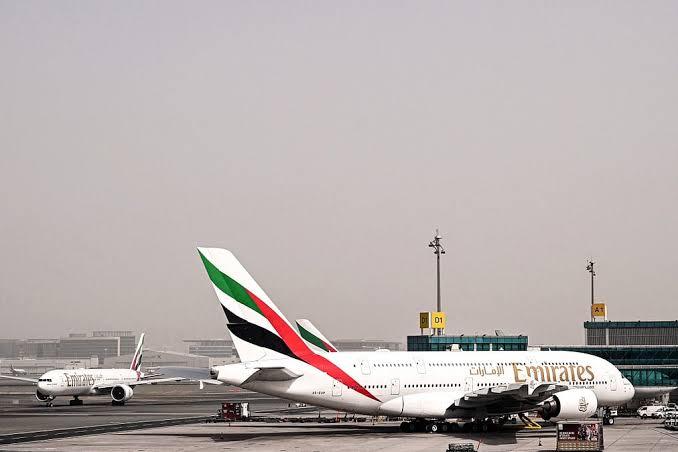
UAE aviation remained largely operational on Tuesday, even as tensions between the United States and Iran continued to simmer, with renewed warnings from Tehran and a reported strike on a commercial tanker in the Strait of Hormuz adding fresh uncertainty to an already volatile regional picture. Dubai International Airport and Zayed International Airport in Abu Dhabi showed little sign of widespread disruption on their public information channels, though some individual flights faced delays.
The situation illustrates the delicate balancing act facing UAE aviation authorities and airlines as the wider US-Iran standoff continues to play out. While flights and shipping have both continued moving through the region, the pattern has been uneven rather than smooth, with route suspensions, short-notice delays and occasional cancellations remaining a real possibility depending on how the security situation develops on any given day.
Major UAE carriers have continued running the bulk of their scheduled services, a sign of the aviation sector's efforts to maintain normal operations despite the surrounding uncertainty. Airlines have generally avoided blanket route suspensions, instead monitoring the situation and adjusting individual flights as needed. That approach reflects lessons learned from previous episodes of regional tension, when carriers sought to keep essential routes running while remaining ready to reroute or delay flights at short notice if security conditions worsened.
Shipping through the Strait of Hormuz, one of the world's most critical energy chokepoints, has not returned to anything resembling normal traffic levels. Commercial vessels are still passing through the strait, but in limited numbers, as competing restrictions and conflicting narratives from both the United States and Iran continue to create confusion over exactly how much traffic is moving and how safe that passage currently is. The strait, through which a significant share of the world's seaborne oil trade passes, has long been viewed as a barometer for regional tension, and the current uncertainty over vessel numbers highlights just how unsettled the situation remains.
Officials have been clear in urging residents and travellers to rely on verified, official channels rather than unverified social media posts when trying to assess the risk of disruption. Airlines, airports and UAE government bodies are considered the most reliable sources for up-to-date information on flight status, route changes and any emerging safety advisories. This guidance comes against a backdrop of rapidly circulating rumours and speculation online whenever tensions in the Gulf region flare up, which can often create a misleading picture of the actual situation on the ground and in the air.
For UAE residents with upcoming travel plans, the practical takeaway is one of cautious normalcy: flights are largely operating, but flexibility remains essential. Those with tickets on routes that pass near the Gulf or through airspace affected by the broader conflict are advised to check their airline's official app or website regularly in the days ahead, rather than assuming a booked flight will proceed exactly as scheduled without any possibility of change.
The broader context behind this latest bout of uncertainty traces back to the ongoing confrontation between Washington and Tehran, which has ebbed and flowed in intensity over recent months. Each fresh development whether a warning issued by Iranian officials, an incident involving a vessel in Gulf waters, or a shift in US military posture in the region tends to ripple outward into aviation and shipping schedules across the wider Gulf, given the UAE's position as a major regional hub for both.
Despite the volatility, the UAE's aviation infrastructure has so far proven resilient, continuing to process the vast majority of scheduled departures and arrivals even during periods of heightened regional tension. That resilience is partly a function of the sheer scale and redundancy built into Dubai and Abu Dhabi's airport operations, both of which handle enormous volumes of daily traffic and have well-established contingency protocols for managing disruptions when they do occur.
As the situation continues to develop, residents, business travellers and tourists moving through the UAE this week are being encouraged to build a degree of flexibility into their plans, keep an eye on official alerts, and avoid making decisions based on unconfirmed reports circulating online. Authorities have signalled that further updates will be issued as the picture around both the conflict and Hormuz shipping traffic becomes clearer in the days ahead.


Leave a comment
Your email address will not be published. Required fields are marked *