
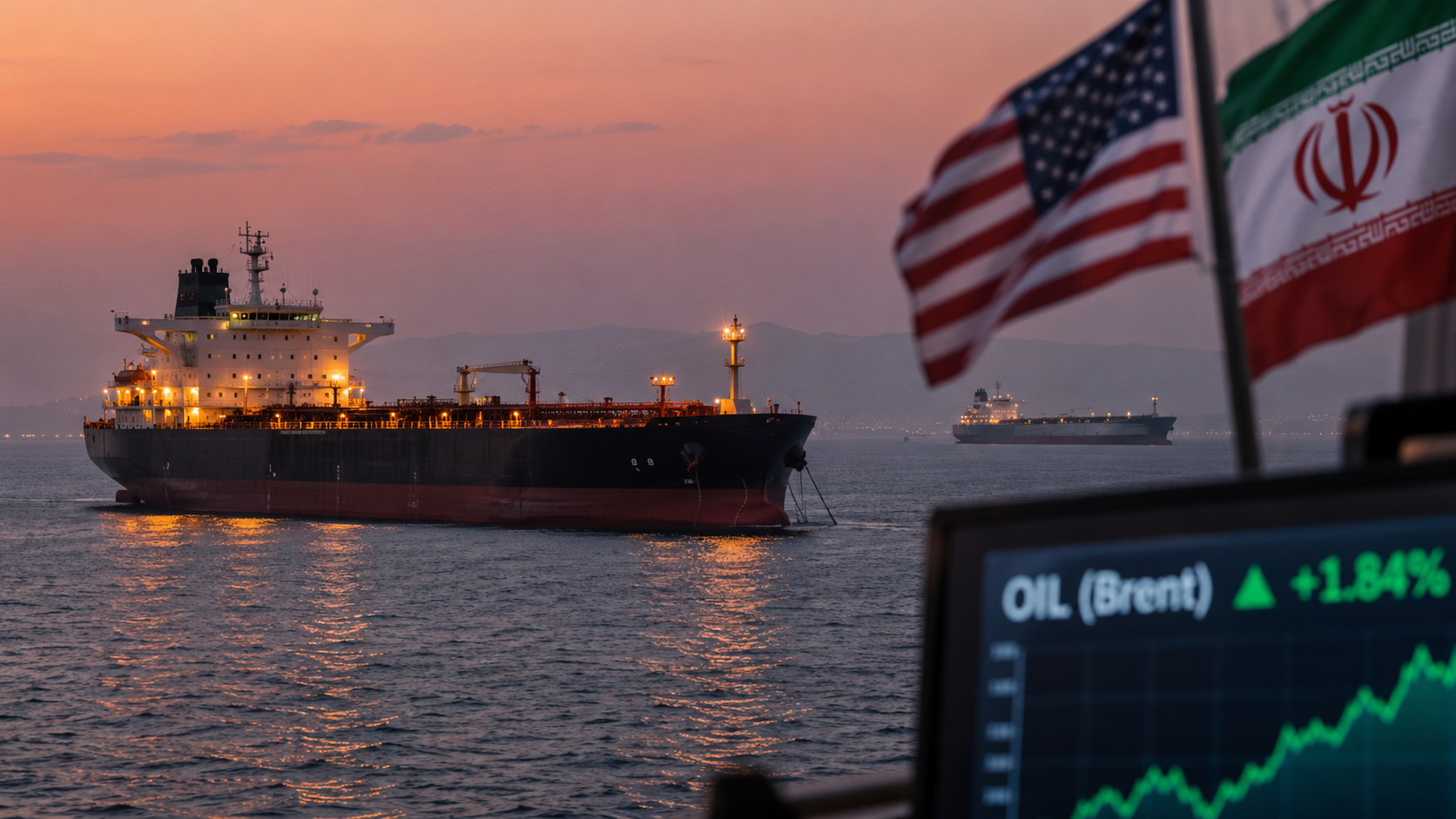
Oil Prices Ease on Iran Talks Hope as the UAE Stays on Alert
Brent crude has slipped to around $103 a barrel as Qatar-mediated contacts raise hopes of a US-Iran deal, but no agreement exists and the UAE says it is braced for the worst. Shipping through Hormuz remains thin, some airlines are still suspending Gulf routes, and UAE fuel prices fell for November.
Oil markets caught their breath on Wednesday as hopes of a diplomatic exit from the US-Iran confrontation took hold. Across the UAE and its Gulf neighbours, however, the mood remained one of careful preparation rather than relief.
Brent crude, the global benchmark, was trading near $103 a barrel in Asian hours, down about 1.7 per cent on the day, according to OilPrice.com. Murban, the Abu Dhabi grade that matters most to UAE exporters, stood around $102.20, a fall of nearly 3 per cent. The decline extends Monday's sharp drop of almost 7 per cent, when Brent settled near $105.50. Prices are still far above pre-war levels, and as recently as late October Gulf News reported Brent was hovering close to $120.
Why prices are easing
Analysts point to a retreat in the geopolitical risk premium, the extra amount buyers pay when conflict threatens future supply. The shift follows reports that Qatar is mediating between Washington and Tehran. Iranian President Masoud Pezeshkian said Supreme Leader Mojtaba Khamenei had authorised the government to pursue peace talks, Gulf News reported.
Yet the distance between the two sides remains wide. Qatar says both countries are still committed to mediation, but a senior Iranian official has said they are "far" from an agreement. Tehran is demanding sanctions relief, an end to the US naval blockade and the release of frozen funds. No deal has been announced.
Washington, for its part, says negotiations are continuing and that no decision has been taken on a renewed attack on Iran. It has not ruled out further strikes, however. The USS Theodore Roosevelt, a third carrier strike group, is reportedly on its way to the US Central Command region, and Iran has warned of a wider conflict if it is hit again.
The UAE's message: diplomacy first, defences ready
Anwar Gargash, diplomatic adviser to the UAE President, told the Manama Dialogue that the country wants a peaceful outcome but is "braced for the worst". He added that Gulf states have strengthened their national defences but have not yet responded collectively as much as the moment requires.
The Wall Street Journal reported on Monday that some Arab states have warned Tehran they could retaliate, individually or together, if their infrastructure is attacked. Gulf countries have also reportedly carried out security drills, including at airports.
Shipping still under strain
The Strait of Hormuz remains the pressure point. Tracking data cited by Gulf News showed only five commodity vessels crossed on Saturday and none on Sunday. Before the war, more than 130 ships transited the waterway every day.
On Tuesday, the UK Maritime Trade Operations centre reported that a tanker was struck by two unidentified projectiles about 14 nautical miles north-east of Lima, off Oman. The engine room was hit, but there were no casualties and no environmental damage. The notice did not name the vessel or say where the projectiles came from. Separately, India said one of its sailors died after an attack on the vessel MSV Al Jusufi near Oman.
Shipping analysts note that higher war-risk insurance and freight rates can eventually filter through to the price of imported goods, a point that matters in a country that imports much of what it consumes.
Flights: a gradual return
Air travel is slowly normalising. British Airways was due to resume Dubai flights on 3 November. Lufthansa, SWISS and Eurowings are expected back from 25 November, and Austrian Airlines from 12 December. Services to Saudi Arabia remain affected, with Etihad extending suspensions on Abu Dhabi routes to Riyadh, Jeddah and Dammam through 5 November.
Some relief at the pump
For households, there was welcome news earlier this week. The UAE Fuel Price Committee cut petrol prices for November after three consecutive monthly increases. Special 95 now costs Dh4.04 a litre, down from Dh4.28 in October. Super 98 is Dh4.16 (from Dh4.40), E-Plus 91 is Dh3.97 (from Dh4.21), and diesel is Dh4.75 (from Dh4.80), according to Khaleej Times.
What residents should do now
Check with your airline before heading to the airport, and allow extra time.
Rely on official UAE announcements rather than unverified social media posts.
Keep passports, emergency contacts and booking details easy to reach.
Businesses should review shipping schedules, insurance cover and supply-chain exposure.
The next few days will test whether the cooling in oil prices reflects a genuine diplomatic opening or simply a pause. For now, the UAE is hoping for the first while preparing for the second.
Leave a comment
Your email address will not be published. Required fields are marked *