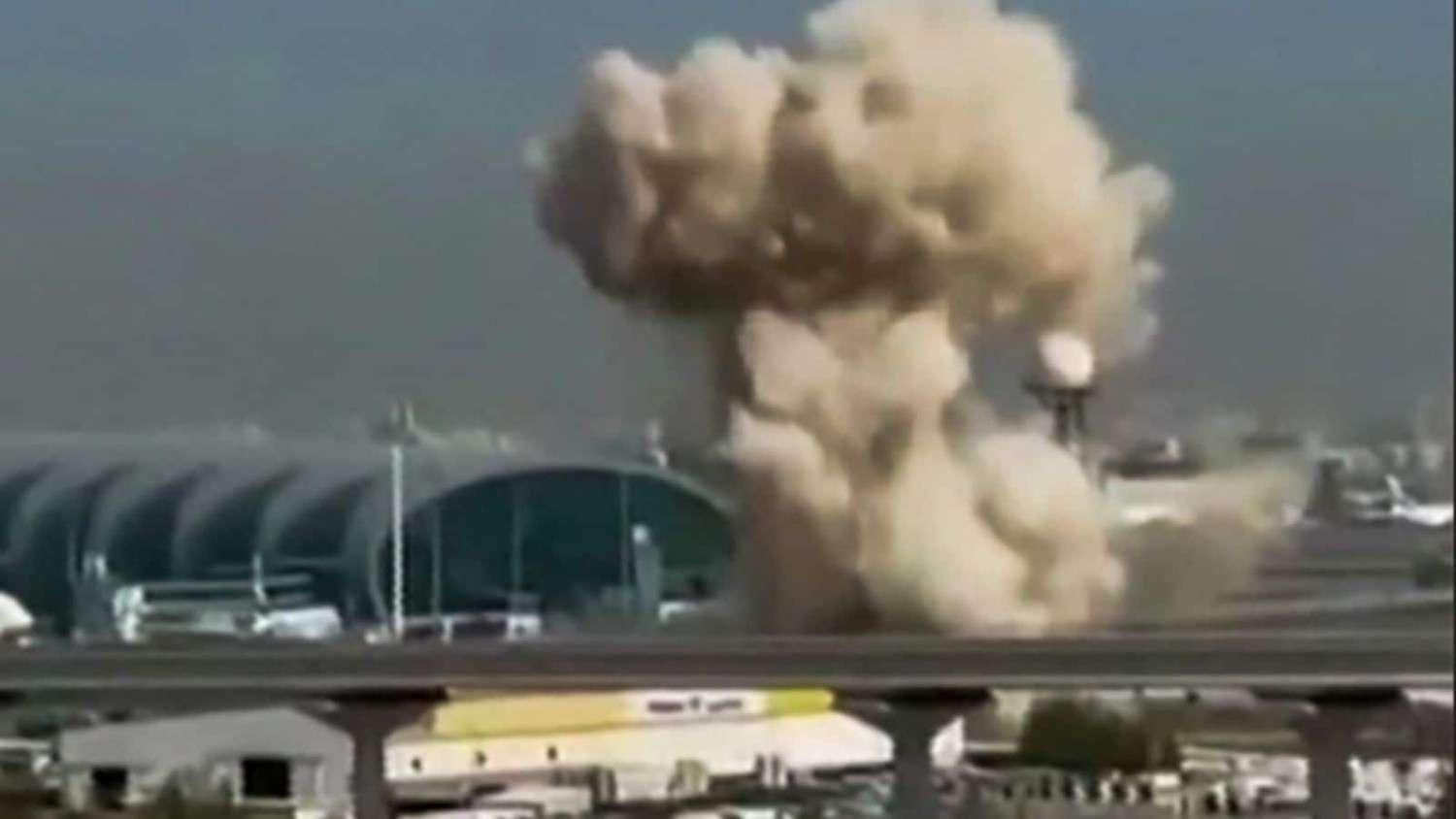
Iran Launches Missile and Drone Attacks on Abu Dhabi and Dubai, UAE Airports Hit
Massive explosions were reported across Abu Dhabi and Dubai after Iran launched a fresh wave of missile and drone attacks targeting the United Arab Emirates, escalating tensions in the Gulf region and triggering temporary suspension of flight operations at several airports. Panic spread across parts of the UAE as residents heard loud blasts and air defence systems activated overnight to intercept incoming threats.
According to reports, multiple missiles and drones were launched toward strategic locations in Abu Dhabi, Dubai, and nearby coastal areas. UAE defence authorities confirmed that air defence systems successfully intercepted several projectiles before they could hit intended targets, although debris from interceptions reportedly caused fires and damage in some areas.
Witnesses across Dubai and Abu Dhabi described hearing repeated explosions and seeing flashes in the night sky as interception systems responded to the aerial assault. Videos circulating on social media showed smoke rising above parts of the cities while emergency sirens and warning alerts were activated.
Authorities temporarily suspended flight operations at key airports, including Dubai International Airport and Zayed International Airport in Abu Dhabi, as a precautionary safety measure during the attacks. Several incoming and outgoing flights were delayed, diverted, or placed on hold while aviation officials monitored the security situation.
Reports indicated that some of the attacks targeted infrastructure linked to aviation, energy, and maritime operations. Earlier strikes linked to the ongoing Iran conflict had already affected Fujairah’s oil facilities and shipping operations near the Strait of Hormuz.
The UAE government strongly condemned the attacks, describing them as a dangerous escalation and a violation of international law. Officials said the country reserves the right to respond to any threats against its sovereignty, citizens, residents, and economic infrastructure.
Residents in several parts of the UAE received emergency alerts on their mobile phones advising them to remain indoors and seek shelter in safe locations until authorities declared the situation secure. Many people reportedly moved to underground parking areas and protected spaces as explosions continued intermittently.
The attacks come amid growing tensions between Iran and the United States in the Gulf region despite ongoing diplomatic efforts aimed at preserving a fragile ceasefire. The Strait of Hormuz remains one of the world’s most strategically important maritime routes, carrying a major portion of global oil shipments.
Security analysts warned that repeated attacks on Gulf countries could severely impact regional stability, global energy markets, and international aviation routes. Oil prices have already shown volatility as fears of wider regional conflict continue to rise.
Despite the chaos, UAE authorities assured residents that security forces and emergency response teams remained fully prepared to deal with ongoing threats. Airports later began gradually restoring operations after airspace monitoring and safety assessments were completed.