
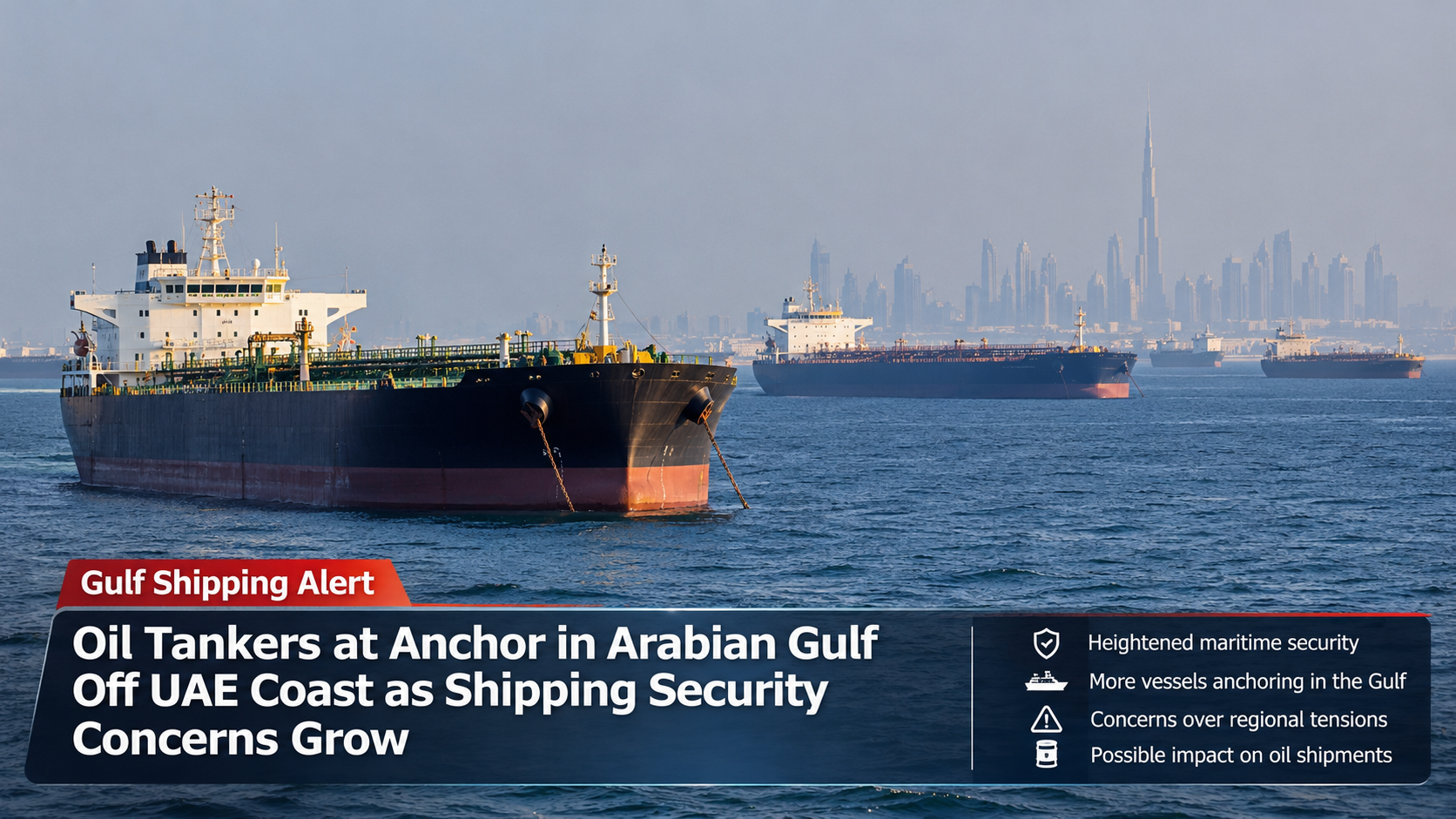
Emirati Ship Damaged in UAE Waters as Gulf Shipping Attacks Keep Pressure on Flights and Oil
An Emirati ship was attacked and damaged in UAE territorial waters on Tuesday afternoon, the latest in a string of incidents on Gulf shipping. The disruption is feeding into flight cancellations on some Saudi routes and volatile oil prices.
An Emirati ship was attacked and damaged in the UAE's territorial waters on Tuesday afternoon, adding to a growing list of incidents that has made Gulf shipping one of the region's most closely watched security concerns. Within hours, the effects were being felt well beyond the water, from airline schedules to oil markets.
What we know about Tuesday's incident
The attack took place in UAE waters in the Arabian Gulf. The company involved has not provided details on which vessel was hit, how badly it was damaged, or whether anyone was injured. No information has been made public about who was responsible. Until more is confirmed, those questions remain open, and caution is warranted in drawing conclusions.
Separately, reports on Tuesday said four crew members were injured after the Liberia-flagged supertanker Fujairah Energy was struck by a projectile while transiting the Arabian Gulf. It is not clear from the available reporting whether the two incidents are connected.
A pattern since the summer
Tuesday's attack follows several earlier incidents involving UAE-linked vessels. In July, two crude oil tankers operated by ADNOC Logistics and Services were struck in the Strait of Hormuz. The UAE Ministry of Defence said at the time that the vessels were hit by missiles launched from Iran while sailing in Omani territorial waters; one crew member was killed and others were wounded. Another company ship was attacked in August, with no injuries reported.
The latest developments come against a tense few days in nearby waters. On Sunday, the UAE National Guard rescued 22 people after a fire broke out aboard a cargo ship in the Sea of Oman. Authorities also closed a major beach on Sharjah's east coast because of an oil spill. It is not known whether the two events are linked.
The wider numbers
The scale of the problem is considerable. Reuters reported that 37 ships were attacked in the strait and surrounding waterways in October, the highest monthly total since the war began, with a further 10 attacks recorded so far in November. Those figures help explain why shipping insurers, traders and travellers are watching every new incident closely.
Flights and travel
The most immediate impact for UAE residents has been on air travel to Saudi Arabia, where attacks launched by Iran-backed Houthis in Yemen have disrupted routes. According to Gulf News, Etihad has suspended flights from Abu Dhabi to Riyadh and Dammam until 19 November. Flydubai's Dammam service was still listed as cancelled, while Emirates and Air Arabia have reported selected disruptions on Saudi routes.
Importantly, UAE airspace remains open, and carriers have been finding ways to work around possible threats. For passengers, though, the practical advice is simple: check your flight status directly with the airline before leaving for the airport, and allow extra time for rebooking if your route is affected.
Oil, fuel and the Hormuz question
Oil prices rebounded on Wednesday after touching two-month lows, as traders weighed the prospect of de-escalation against continuing attacks on shipping around Hormuz. The Strait matters to the UAE and to the world economy because disruption there can affect fuel costs, shipping reliability and travel plans. For households, the connection is not always immediate, but sustained volatility in crude markets tends to filter eventually into transport and supply-chain costs.
The UAE has also been among the most active users of alternative arrangements to move crude out of the Gulf without relying solely on the strait, according to earlier Reuters reporting, which is why the safety of its tankers draws such attention.
What to watch next
Several things are worth following in the coming days. First, whether the company or authorities confirm the identity of the vessel and any casualties. Second, whether airlines extend their Saudi route suspensions beyond 19 November. Third, how oil markets react if the pace of attacks rises or falls. And finally, whether diplomatic efforts produce any sign of de-escalation, which traders say would be the clearest signal for prices.
For now, residents can take some reassurance from the fact that UAE airspace is open and day-to-day life continues. But the steady drumbeat of incidents on the water is a reminder that regional security and everyday economics are closely linked, and that the situation can change quickly.


Leave a comment
Your email address will not be published. Required fields are marked *