
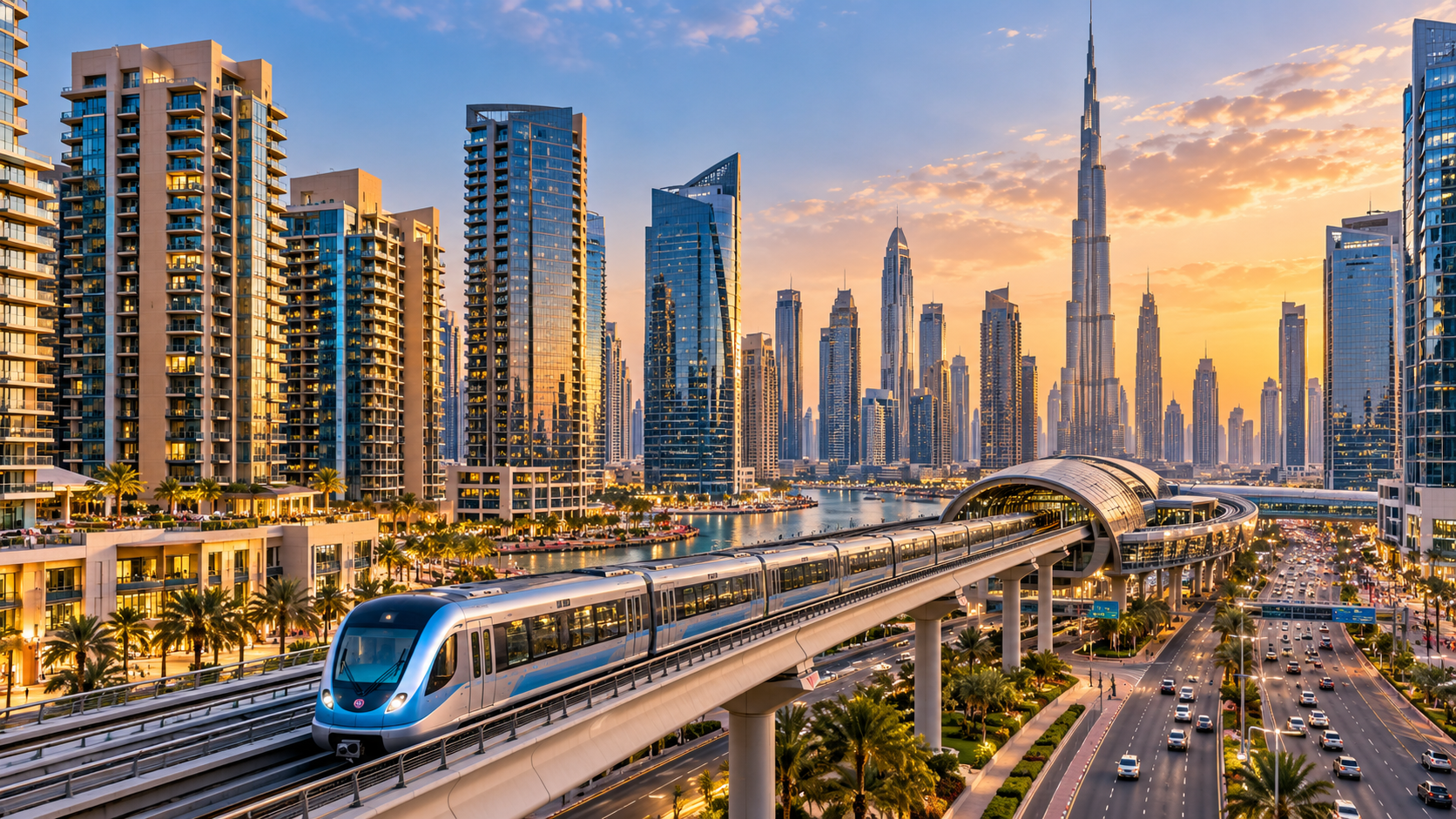
Dubai Approves AED 2 Billion Urban Centres Plan to Bring Homes, Jobs and Metro Closer Together
Dubai's Executive Council, chaired by Sheikh Hamdan bin Mohammed, has approved a plan worth more than AED 2 billion to 2040 that will build integrated communities around public transport. The council also approved a Sustainable Population Planning Policy and a UAE PASS-powered Digital Authorisation System.
Dubai has signed off on a long-range blueprint to change how its residents live, work and travel, committing more than AED 2 billion through 2040 to a network of urban centres built around public transport.
The decision was taken on Tuesday at a meeting of the Executive Council of Dubai, chaired by Sheikh Hamdan bin Mohammed bin Rashid Al Maktoum, Crown Prince of Dubai, UAE Deputy Prime Minister and Defence Minister. Sheikh Maktoum bin Mohammed and Sheikh Ahmed bin Mohammed also attended, the Dubai Media Office said.
Speaking at the session, Sheikh Hamdan said the emirate is advancing plans that balance economic growth with population expansion, while making sure infrastructure, services and community development keep pace with future needs.
What the Urban Centres Development Plan covers
At the centre of the package is the Urban Centres Development Plan. It spans six main urban centres and 42 supporting sub-centres, and it is designed to concentrate housing, jobs and everyday services around public transport hubs rather than letting them spread out across the city.
The council set out several measurable targets. The plan is expected to lift the value of targeted real estate areas by AED 20 billion. It also aims to raise the share of residents living near metro stations from 52 per cent to 74 per cent, and to widen public service coverage from 74 per cent to 85 per cent.
Put simply, the goal is a city in which more people can reach work, schools, clinics and shops without depending on a long car journey.
Why proximity to the metro matters
Urban planners often describe this approach as building "complete communities": neighbourhoods where the daily essentials sit within a short walk or a quick train ride. For a city of Dubai's size and growth rate, the appeal is easy to see. Shorter commutes ease pressure on roads, and denser clusters of homes and offices can make public transport more viable.
The 52-to-74 per cent target is one of the most striking figures in the announcement. Moving that many more residents within reach of a station would be a significant shift, and it will depend on how quickly new housing and commercial space is delivered in the designated centres.
A population policy to guide the growth
The Executive Council also approved a Sustainable Population Planning Policy. Officials described it as an integrated framework that links demographic trends with economic and urban planning.
The aim is to give planners a clearer view of how many people the emirate is likely to house and what they will need, so that decisions on infrastructure, services and talent attraction can be made with that picture in mind. In a market where population growth has long been tied to the economy's performance, a policy that connects the two formally is likely to be watched closely by developers and service providers alike.
Cutting paperwork with a Digital Authorisation System
The third major decision was more immediately practical for everyday users. The council approved a new Digital Authorisation System that will allow individuals and companies to authorise others to complete government transactions on their behalf.
The platform is paperless and secured through UAE PASS, the national digital identity. Authorities said it is designed to simplify procedures, reduce risks and deliver a smoother government experience.
For residents, that could mean less time spent queuing or arranging paper power-of-attorney documents for routine matters. For businesses, it may streamline tasks that currently depend on a named representative being physically present. The announcement did not list which services will be covered first or give a launch date.
What it means for residents and investors
For home buyers and tenants, the plan signals where future growth is likely to be concentrated. Areas close to the designated centres and to metro lines may see more attention from planners and developers, though the council has not yet published the full list of locations or a phasing schedule.
For investors, the AED 20 billion uplift estimate is notable, but it is a projection tied to the plan's delivery. As with any long-term programme, results will depend on execution, market conditions and the pace of transport and infrastructure projects.
What to watch next
Several details remain to be clarified: which neighbourhoods make up the six main centres, how the 42 sub-centres will be sequenced, and how the plan will interact with existing master plans. Further information is likely to come as individual projects move through approval and procurement.
What is already clear is the direction of travel. Dubai is betting that its next phase of growth will be defined less by spreading outward and more by building connected, well-served communities around the transit network it has already invested in.
Leave a comment
Your email address will not be published. Required fields are marked *