Arab Media Summit 2026 Puts AI and Gen Z Storytelling at the Heart of Dubai's Global Media Push
The Arab Media Summit 2026, running from September 15 to 17 at Dubai World Trade Centre, has drawn around 10,000 media professionals to explore how artificial intelligence, digital platforms, and Gen Z audiences are reshaping journalism and the wider creative economy across the region.
Dubai's Flagship Media Event Reaches Milestone Scale
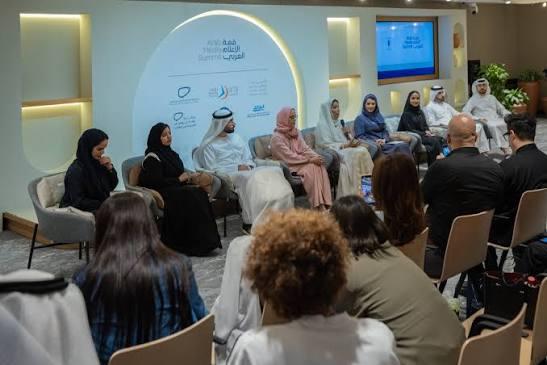
The Arab Media Summit 2026 is underway at the Dubai World Trade Centre, running from September 15 through 17 under the patronage of His Highness Sheikh Mohammed bin Rashid Al Maktoum, Vice President and Prime Minister of the UAE and Ruler of Dubai. This year's edition has grown into the largest in the summit's history, drawing an estimated 10,000 media professionals, more than 400 speakers from 23 countries, and representatives from roughly 250 media organisations across more than 175 sessions.
The scale of this year's gathering reflects Dubai's long-standing ambition to position itself not merely as a regional media hub but as a genuine bridge between Arab media voices and a global audience—an ambition that organisers say has only intensified as digital platforms reshape how news and entertainment are produced and consumed worldwide.
Royal Visit Highlights Summit's Growing Scope
Her Highness Sheikha Latifa bint Mohammed bin Rashid Al Maktoum, Chairperson of Dubai Culture and Arts Authority, toured the summit venue this week, where she was briefed on the expanded range of topics and specialised programming featured in this year's edition. Her visit underscored the growing institutional weight placed on the summit as both a business event and a platform for shaping cultural and media policy across the region.
AI, Verification, and the 'Crisis of Truth'
Among the most closely watched threads running through this year's programme is the accelerating role of artificial intelligence in newsrooms and content creation. Sessions have examined not only how AI tools are being integrated into everyday journalistic workflows, but also the mounting challenges around information verification in an era when synthetic content and rapid social media dissemination can outpace traditional editorial fact-checking processes.
One panel focused specifically on economic media, featuring executives from Dubai Media Incorporated and financial content platform Moniify, who discussed the tension between the speed of social media—where investment commentary and market takes can spread within seconds—and the slower, more deliberate verification standards that professional financial journalism has long relied upon. The discussion highlighted a challenge facing nearly every newsroom represented at the summit: how to remain fast and relevant without sacrificing the credibility that separates professional media from unverified online chatter.
Reaching Beyond Regional Audiences
A separate panel titled "Regional Voices, Global Influence" brought together television and digital media executives to discuss how Arab news organisations can tell their own stories while building audiences well beyond the region's borders. Speakers noted that for decades, international audiences often encountered Middle Eastern stories primarily through non-regional broadcasters, but the growth of English-language regional channels and digital platforms has begun shifting that dynamic, allowing local journalists more direct control over context, sourcing, and editorial framing.
Executives from Dubai Media Incorporated and international broadcaster AnewZ both stressed that competing globally requires more than producing content in English—it demands the same editorial rigor, verification standards, and reliable reporting infrastructure that established global broadcasters have spent decades building.
A Historic First for the Euronews Forum
In a notable first, Dubai is hosting the Euronews Forum on September 16 as part of the summit—marking the first time this European media forum has been held outside of Europe. The forum's presence in Dubai speaks to the growing international partnerships underpinning this year's programme and reflects broader efforts to position the emirate as a genuine crossroads between Arab and international media industries.
Film, Gaming, and the Creative Economy
Beyond traditional journalism, the summit has dedicated significant programming to the region's growing film and gaming sectors through specialised forums organised by the Dubai Films and Games Commission. These sessions have explored investment opportunities, talent development, and the increasing role of AI across production pipelines, positioning Dubai's creative economy as a growth area distinct from, but increasingly intertwined with, its traditional media and journalism sectors.
Why This Matters for the UAE's Media Landscape
For Dubai specifically, the summit's continued growth reinforces the emirate's broader economic diversification strategy, in which media, content creation, and creative industries are treated as genuine economic pillars rather than peripheral cultural activities. As AI reshapes production costs and audience expectations globally, events like the Arab Media Summit give regional players a structured forum to adapt collectively rather than in isolation—an approach organisers hope will keep Arab media competitive on the world stage for years to come.
Leave a comment
Your email address will not be published. Required fields are marked *