ADNOC, OpenAI and G42 Seal AI Partnership as ADIPEC 2026 Puts Energy Security in Focus
ADNOC announced an AI agreement with OpenAI and G42 on the opening day of ADIPEC 2026, saying it will become the first energy company to deploy OpenAI Frontier. ADNOC's chief warned that the Hormuz disruption has drained global stocks and made delivery the new test of energy security.
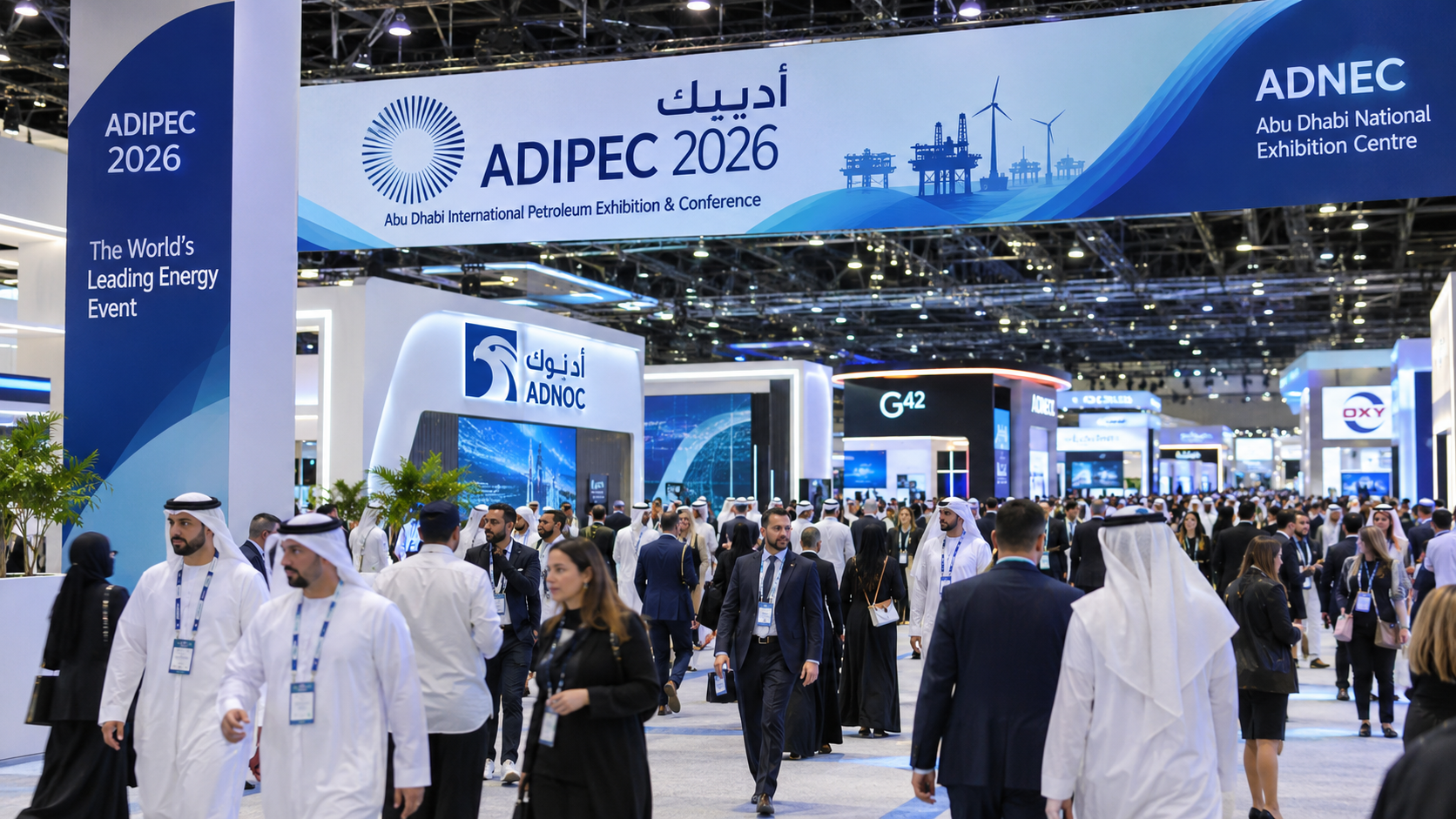
Abu Dhabi National Oil Company has signed a new artificial intelligence agreement with OpenAI and the Abu Dhabi technology group G42, announcing the deal as the 42nd Abu Dhabi International Petroleum Exhibition and Conference opened in the capital. The partnership, guided by Sheikh Khaled bin Mohamed bin Zayed, Crown Prince of Abu Dhabi and Chairman of the Executive Council, will make ADNOC the first energy company in the world to deploy OpenAI Frontier, according to the company's chief executive.
The announcement set the tone for a conference that organisers describe as the largest in its history and that has been dominated by one question: how the world secures energy at a time when shipping routes are under strain.
What the agreement covers
Dr Sultan Al Jaber, UAE Minister of Industry and Advanced Technology and ADNOC's Managing Director and Group CEO, said the partnership will reshape how the company develops fields, manages assets and runs its commercial operations. The goal, he said, is to make ADNOC's systems smarter, safer, more secure and more productive.
Speaking on stage with OpenAI chief executive Sam Altman, who travelled to Abu Dhabi for the opening, Al Jaber put the deal in the context of the global debate over AI's appetite for power. "Now together we will find out what AI can do for energy," he said, turning around the question the world has been asking since ChatGPT arrived, which is what energy can do for AI.
Altman: energy is the bottleneck
In a question-and-answer session moderated by The National's editor-in-chief, Mina Al-Oraibi, Altman said demand for AI is growing and that the energy industry has an obligation to help meet it. Asked to name the biggest challenge facing his sector, he pointed to energy. He also stressed that people must remain in control of the technology, arguing that AI should serve people rather than the other way round.
The exchange underlined why the partnership matters beyond ADNOC's own balance sheet. Data centres and advanced models are voracious consumers of electricity, and a producer that can use AI to run its own operations more efficiently is also positioning itself as a supplier to the industry driving that demand.
Energy security measured at the point of delivery
Al Jaber's opening address was blunt about the pressures on global supply. He said that since the disruption of the Strait of Hormuz, nearly one billion barrels have been drawn down from global oil inventories. In some markets, he added, diesel stocks have fallen to their lowest seasonal level in 35 years, while other regions face an LNG supply gap of around 600 billion cubic feet.
The cost of moving energy has also changed. Shipping and logistics once accounted for less than five per cent of the cost of a barrel, he said, but now make up more than 30 per cent. Energy security, he argued, must now be measured at the point of delivery as well as the point of production.
He set out five priorities for the industry: accessible supplies, routes to market, operational intelligence, capital and, which he called the most important, people, meaning the workers who make sure every barrel arrives. The industry, he said, must move from automated operations to intelligent systems that can anticipate risks, optimise performance and lower costs.
On the UAE's own position, Al Jaber said the country's approach had been tested under pressure and proven by results: talent stayed, capital stayed, investment kept coming and the economy kept moving. He added that the UAE would continue to advocate dialogue and diplomacy to bring stability to energy markets and the global economy.
A record-sized show
The scale of this year's event reflects the urgency. Figures shown at the opening put participation at more than 170 countries, 2,260 exhibiting companies, 30 country pavilions and some 40 government ministers. Organisers say the programme includes more than 1,800 speakers across upwards of 380 conference sessions, with exhibitions spread across 16 halls at the Abu Dhabi National Exhibition Centre. Demand was high enough that the opening ceremony was moved to the Abu Dhabi Energy Centre to make room for new partners and participants.
Sheikh Mansour bin Zayed Al Nahyan, Vice President, Deputy Prime Minister and Chairman of the Presidential Court, formally opened the event under the patronage of President Sheikh Mohamed bin Zayed. He stressed the need to balance energy security, economic growth and sustainability, and described ADIPEC as a platform for turning investment opportunities and technology into practical projects. The conference runs until 5 November.
Why it matters
For the UAE, the day's announcements fit together. A national oil company that has spent months explaining how it keeps barrels flowing through a disrupted region is now saying that intelligence, not only infrastructure, is the next layer of resilience. For global readers, the takeaway is that the largest energy producers increasingly see AI as part of the supply chain itself.
Questions remain about the details. Neither ADNOC nor its partners have published a timeline or a full list of the operations that will be handed to the new systems, and the practical results will take time to show. For now, the agreement marks a clear statement of intent at a moment when the energy industry is being asked to produce more, deliver more reliably and do so with fewer people on the front line of risk.
Leave a comment
Your email address will not be published. Required fields are marked *