Abu Dhabi to Dubai in Just 25 Minutes? UAE's Electric 'Flying Boats' Could Revolutionize Water Travel
United Arab Emirates — The UAE is pioneering a futuristic maritime transport concept that could slash travel time between Abu Dhabi and Dubai to approximately 25 minutes. Electric-powered "seagliders" — hybrid vessels combining hydrofoil technology with aircraft-inspired aerodynamics — are being advanced through public-private collaborations, offering a glimpse of zero-emission, high-speed coastal travel along the Emirates' shoreline.
If realized, these electric flying boats would transform a journey that currently takes nearly two hours by road into a swift, sustainable commute, fundamentally reshaping mobility between the country's two largest cities.
What Are Electric Seagliders?
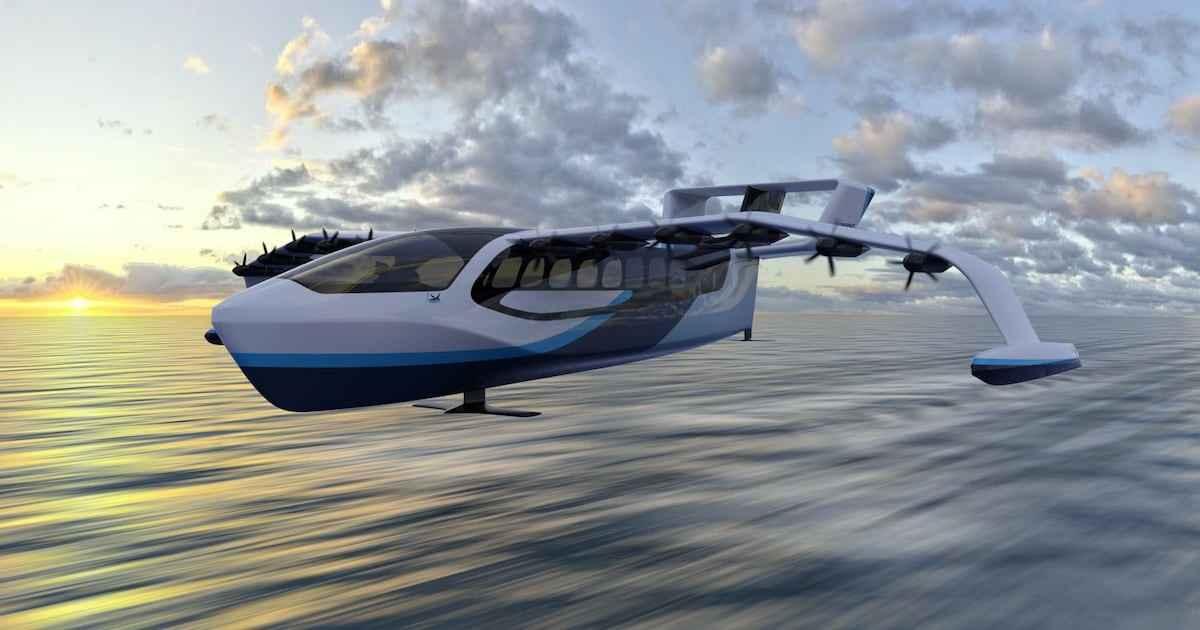
Electric seagliders represent an entirely new class of marine vessel. Often described as "flying boats," they operate through a three-phase sequence: traditional hull-borne navigation at low speeds while docking, rising onto hydrofoils during takeoff, and finally skimming approximately one to three metres above the water surface at cruising speed.
This approach leverages the wing-in-ground (WIG) effect, where compressed air beneath the craft's wings generates additional lift when flying in close proximity to the sea surface. Modern electric propulsion systems and advanced composite materials have overcome limitations that plagued earlier WIG designs, enabling reliable, efficient, and environmentally responsible high-speed water transport.
Unlike conventional ferries, seagliders experience dramatically reduced drag. Unlike helicopters or seaplanes, they consume far less energy and produce zero direct emissions.
Transforming Coastal Mobility
The UAE's seaglider initiative aligns with the nation's broader Vision 2030 strategy to position itself as a global laboratory for next-generation transport technologies.
The Abu Dhabi-Dubai corridor represents an ideal proving ground. Millions of commuters and travelers move between the cities annually along approximately 150 kilometres of navigable water route, and existing ports and marinas can be adapted for seaglider terminals.
Proponents estimate the 25-minute transit time would undercut not only road travel but also rival air connections when accounting for airport security, boarding, and ground transfer times.
The Regent Viceroy Connection
Industry attention has focused on Regent Craft's Viceroy seaglider, a 12-passenger, all-electric prototype that debuted at the Dubai Airshow. The Massachusetts-based company has established strong ties with UAE partners, viewing the Emirates as an ideal early adopter market due to its protected coastal waters suitable for seaglider operations, government appetite for transformative transport solutions, existing investment in advanced mobility infrastructure, and climate alignment with zero-emission transport goals.
Regent's Viceroy has already secured commercial commitments from several regional operators, signaling confidence in the technology's readiness.
Timeline: When Could Seagliders Launch?
Industry insiders suggest a phased deployment trajectory beginning with prototyping and testing through 2026, including certification, route validation, and safety trials. Pilot operations could follow between 2026 and 2028, with limited commercial services and infrastructure refinement. Full expansion would occur after 2028, involving network growth, increased vessel numbers, and passenger scaling.
Early commercial services could align with the 2026-2027 timeframe, coinciding with Dubai's planned rollout of electric aerial taxi services using eVTOL aircraft.
Environmental and Strategic Benefits
Electric seagliders offer compelling advantages beyond speed.
- Zero direct emissions: Fully electric propulsion eliminates CO2 and particulate output during operation.
- Reduced noise: Significantly quieter than helicopters or conventional high-speed ferries.
- Minimal wake disturbance: Hydrofoil operation creates negligible wave impact on shorelines and marine life.
- Energy efficiency: Exploiting ground effect requires substantially less power than sustained flight.
These attributes align with the UAE Net Zero by 2050 strategic initiative and reinforce the country's credentials as a sustainability leader.
Challenges to Overcome
Despite significant momentum, the seaglider vision faces substantial hurdles.
Infrastructure development requires terminals, passenger handling facilities, and high-capacity charging stations at key coastal locations. While existing marinas offer starting points, dedicated seaglider ports will require significant investment.
Regulatory frameworks must address that seagliders occupy a grey zone — neither fully vessel nor aircraft. Civil aviation authorities and maritime regulators must establish clear certification pathways, operational rules, and safety standards.
Public acceptance depends on passengers developing confidence in seaglider safety, reliability, and comfort — particularly in variable sea conditions.
Scalability economics demand that the transition from prototype demonstration to commercially viable mass transport requires significant capital and proven operational economics.
Also Read: Indian Family in Dubai Mistakenly Tosses ₹12-13 Lakh Worth of Gold in Trash — Police Track and Return It in Three Days
Conclusion: A Bold Vision for Coastal Superhighways
The UAE's pursuit of electric seagliders represents more than technological curiosity. It reflects a deliberate strategic bet that future mobility will be electric, autonomous, and multimodal — integrating land, air, and sea networks into seamless travel experiences.
Twenty-five minutes from Abu Dhabi to Dubai is not yet reality. But the foundational elements are converging: proven technology, committed partners, supportive government vision, and geographic advantage.
For commuters weary of highway congestion, for travelers seeking efficient coastal connections, and for a nation determined to build the future, the seaglider cannot arrive soon enough.