
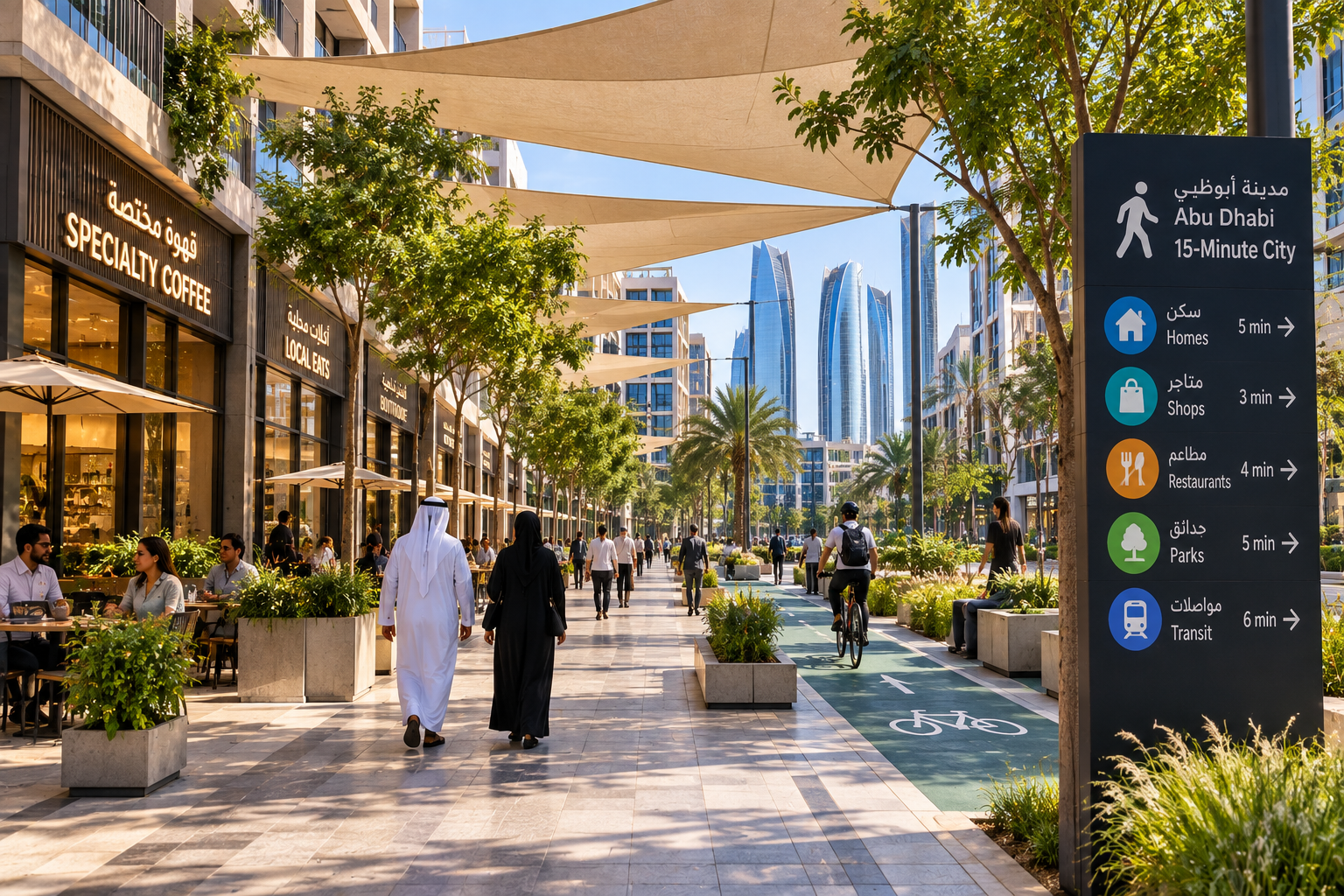
Abu Dhabi Backs '15-Minute City' Vision With Dh240 Billion Infrastructure Plan
Abu Dhabi plans to invest Dh240 billion ($65.4 billion) over the next decade to build communities where residents can reach work, schools, healthcare and leisure within 15 minutes. Officials outlined the plans on the opening day of the LIVEX exhibition in the capital.
Abu Dhabi wants residents to reach their jobs, their children's schools, the doctor and the park without spending long stretches of the day in traffic. To get there, the emirate plans to spend Dh240 billion ($65.4 billion) on infrastructure over the next decade.
Urban planners outlined the "15-minute city" concept on Tuesday as the foundation for the UAE's future development. Their remarks came on the opening day of LIVEX, a three-day exhibition in the capital devoted to liveable cities and the technology that supports them.
What a 15-minute city means
The idea is simple to describe and hard to deliver. Everyday needs should sit close enough to home that residents can reach them within a quarter of an hour, on foot, by bike or on public transport. The intention is to give time back to people who would otherwise lose it to long journeys and congestion.
In Abu Dhabi's version, shaded walking corridors, less urban sprawl and better public transport will be central over the next ten years, with the aim of reducing dependence on cars. Solutions under discussion at the exhibition range from moving affordable housing closer to workplaces to expanding autonomous transport.
Eisa Almazrouei, director general of the Infrastructure Development Directorate at the Abu Dhabi Department of Municipalities and Transport, described the ambition plainly. He said the goal is to make Abu Dhabi the most enjoyable and liveable city in the world, and that the government involves communities to understand what residents actually need.
Progress already visible
Officials pointed to projects that have already changed how people move around the capital. In March, two new bridges opened linking Reem Island directly to Sheikh Khalifa bin Zayed Highway. They are designed to handle up to 7,200 vehicles an hour and have cut peak travel times by 60 per cent, or 15 minutes.
Beyond roads, Almazrouei said the emirate has added around 350 parks and expanded its cycle network from 900km to more than 2,000km. His argument was that these projects serve the wider community rather than only the transport system.
Technology at the centre
Jim Hagemann Snabe, chairman of Siemens AG, told the audience that technology can do much of the work of making cities more efficient, provided it remains focused on people. He urged planners to design environments around viability, feasibility, desirability and sustainability, and said the best technology is the kind residents barely notice. Smart traffic systems, multimodal public transport and pedestrian-first or car-free spaces are the kinds of tools he and other speakers described.
The tourist and cultural hubs of Saadiyat Island, Yas Island and Al Maryah Island are expected to benefit from closer links as autonomous vehicles are rolled out.
Masdar City as a model
Speakers repeatedly returned to Masdar City as proof that the concept can work. Launched in 2006 and now twenty years old, it is built around the idea of having everything within easy reach of residents. Since opening it has carried more than three million people in autonomous vehicles.
Ahmed Baghoum, chief executive of Masdar City, said the master plan was centred on environmental, commercial and social sustainability. The community has more than 200,000 square metres of public parks covered by solar panels and canopies, designed to make evenings outdoors comfortable for families. Belonging, he said, matters as much to residents as to visitors.
An idea with international precedent
The 15-minute model is not new. Paris has moved schools, parks and services closer to families to improve access and community cohesion, while Melbourne has adopted a child-friendly city policy that prioritises safe walking routes, access to nature and play areas.
The difference in Abu Dhabi is scale and climate. Shade and cooling are not optional extras in a country where summer heat limits how far people will walk, which is why shaded corridors feature so prominently in the plans.
What to watch
A Dh240 billion commitment is significant, but the measure of success will be daily experience. Residents will notice whether their commute shortens, whether services genuinely sit close to home and whether neighbourhoods feel connected. Affordable housing near jobs, mentioned by speakers at the exhibition, may prove one of the harder pieces.
For now, the direction is clear. Abu Dhabi is betting that a city designed around time saved will be a city people want to live in.

Leave a comment
Your email address will not be published. Required fields are marked *