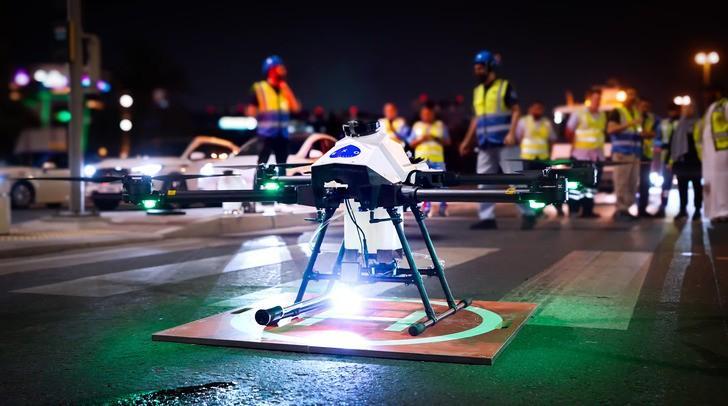
Dubai Launches Pioneering Pilot: Drones to Clean Traffic Signals
In a move emblematic of its smart city ambitions, Dubai has launched an innovative pilot project using drone technology to clean traffic signals. Unveiled by the Roads and Transport Authority (RTA) in December 2025, the initiative replaces traditional, labor-intensive methods with an automated aerial system, promising significant gains in safety, efficiency, and cost savings.
Replacing Traditional Methods with Aerial Innovation
Traffic signal cleaning has historically relied on crews using cherry pickers, manlifts, and heavy vehicles—methods that involve traffic disruptions, safety risks for workers, and high operational costs. The RTA’s drone-based system aims to eliminate these challenges by deploying specialized aerial devices to perform the cleaning, marking a transformative shift in basic infrastructure upkeep.
Pilot Project Details and Early Results
The initial trials were conducted at the Marrakech Street–Rebat Street junction. During tests, the area was temporarily secured to allow drones to operate safely. The early results have been highly promising:
- Speed: Drones cleaned one side of a traffic signal in just 3-4 minutes—a task that takes considerably longer manually.
- Efficiency: Operational time is estimated to be reduced by 25% to 50%.
- Cost Savings: Preliminary assessments show 15% lower costs, with projections suggesting savings could reach 25% as the technology scales.
Core Benefits: Safety, Sustainability, and Smart Cities
The project's motivation extends beyond economics:
- Enhanced Safety: The primary driver is worker safety. Drones eliminate the need for personnel to work at height near moving traffic, drastically reducing accident risks.
- Environmental Sustainability: By reducing the use of heavy fuel-consuming machinery and optimizing water use, the initiative supports Dubai’s green goals.
- Smart City Leadership: This pilot is a strategic step in integrating AI, IoT, and automation into municipal services, cementing Dubai’s reputation as a global smart city leader.
Official Vision and Next Steps
Abdulla Ali Lootah, Director of Roads and Facilities Maintenance at the RTA, stated the authority is committed to embedding advanced tech into maintenance. The pilot is being evaluated on four key metrics: time, cost, quality, and safety. While results are encouraging, subsequent phases will refine the methodology and optimize operations to minimize traffic disruption.
Broader Implications and Future Applications
The success of this pilot could unlock wider applications for drone technology in urban management, including:
- Facade cleaning of public buildings and bridges.
- Infrastructure inspection for roads, tunnels, and streetlights.
- Surveying and mapping for urban planning.
This project positions Dubai as a potential model for global cities seeking to leverage automation for safer, more efficient, and sustainable municipal operations.
Alignment with Dubai’s Strategic Vision
The drone initiative is a direct implementation of Dubai’s broader smart city strategy, which envisions a hyper-efficient, tech-driven urban ecosystem. It complements other innovations like AI traffic management and digital mobility platforms, collectively aiming to enhance resident quality of life and operational excellence.
Also Read: UAE Honors Trading Specialist Shakib With Golden Visa for His Impact on Financial Markets and Trading Education
Conclusion: A Cleaner, Smarter Future
Dubai's traffic signal cleaning pilot is more than a maintenance upgrade—it's a proof-of-concept for the future of urban management. By prioritizing innovation, the RTA is not only solving immediate challenges but also paving the way for a new era of intelligent, responsive, and safe city infrastructure. As the pilot expands, it will further solidify Dubai’s place at the forefront of the global smart city movement.